Tag Archives: Alois Preston Fitz Randolph

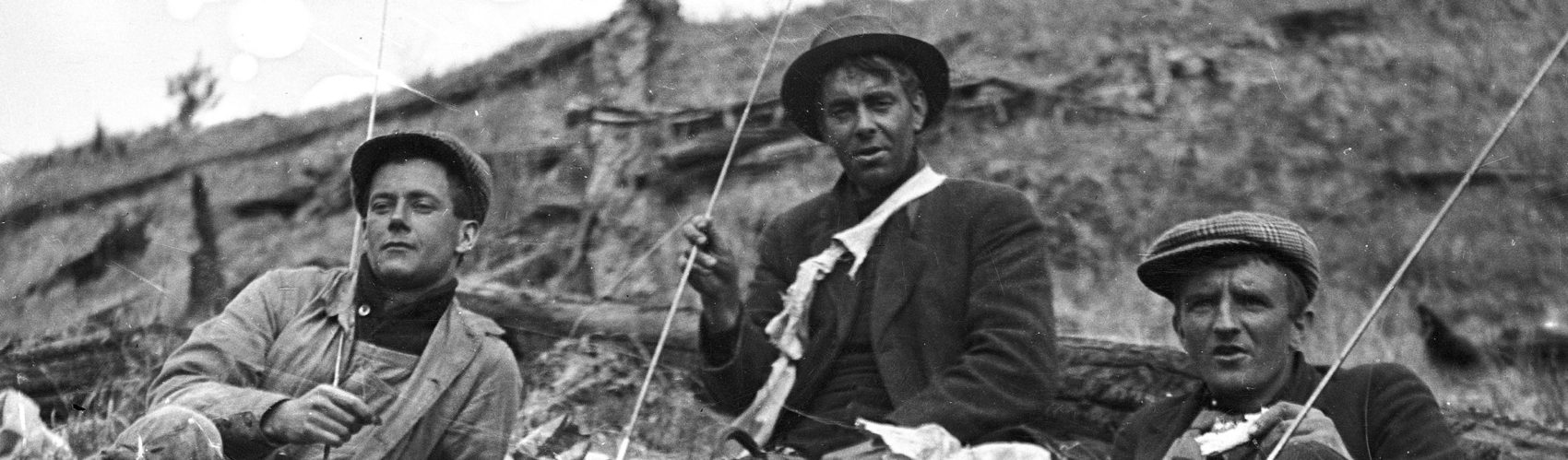
Alois Preston “Pressy” Fitz Randolph

Alois Preston “Pressy” Fitz Randolph was born Sept 7, 1872 in Berea, WV.  He married Jennie Mae Sutton, daughter of Martin and Mary (Stalnaker) Sutton on March 28, 1895.  Alois Preston died November 10, 1953 at the home of his daughter Avis in Cleveland, TN, and Jennie died there April 23, 1962.  They are buried in Pine Grove Cemetery in Berea, WV.

Alois was a school teacher in Ritchie, Harrison, Braxton and Taylor Counties for 50 years.  He taught mostly in one-room country schools, and wrote an autobiography which gives valuable insight into rural life and schooling in West Virginia in the last quarter of the 19th century and first half of the 20th century.

Children of Alois Preston Fitz Randolph and Jennie Mae Sutton, all born in Berea, WV:

1.    Brady Fitz Randolph, born July 28, 1896, married Mary Anna Juergens on August 24, 1918.  He was a graduate of Salem College, teacher, postmaster, International Harvester dealer, Chevrolet dealer, and active in many civic affairs.  Mary was also very active in the community, and was President of several clubs and organizations.

2.    Harold Fitz Randolph, born January 1, 1899, died January 24, 1901 of whooping cough

3.    Ashby Fitz Randolph, born January 24, 1901 (same day Harold died), and died June 19, 1993.   He married Ruth Content Bond in December 1925.  They are my grandparents, and their information is in the section below and their autobiography.

4.    Avis Fitz Randolph, born October 30, 1903, married Archie Roosevelt Swiger on May 31,1928.  Avis wrote an autobiography, the first seven chapters of which are published on this site.

5.    Randal Fitz Randolph, born February 8, 1905, died March 10, 1907

6.    Rev. Elmo Fitz Randolph, born August 31, 1913, married Madeline Watts on September 1, 1937.  They had seven children, six of whom lived to adulthood.  Uncle Elmo wrote about his life in three books, and encouraged me to publish them on the web so they could be broadly available.  The first two books are currently published, and I will publish the third after I have it scanned in.

Asa Fitz Randolph

Asa Fitz Randolph was born Feb 15, 1833, and died of ptomaine poisoning September 3, 1903 in Berea, WV.  He is buried in Pine Grove Cemetery in Berea.  His first marriage was to Marvel Maxson, born to John and Mary (Bee) Maxson on September 4, 1832 in Greenbrier, WV.

The chance for schooling was very limited, and Asa never got more than three quarters or nine months of schooling until after he was married. He had a felon (an infected abscess deep in the palm side of his thumb tip) on his right hand which kept his arm in a sling for 18 months. Part of this time he went to school. Later he cut his leg very badly; as soon as he was able to ride, he went to school. He read much and was especially good in figures. In fact, one of his teachers said that he did not need to study arithmetic-he could make one. His interest in education is shown in the fact that of the nine children who grew up, all went to college at least a year, and five have a degree.

Marvel was as much interested in education as Asa, but she did not have as good a chance as he. She could read about like a third grader. She was a very great worker; the only request she made of Asa before they were married was that he would furnish her plenty of work. She was also an excellent manager. There is little doubt that she had much to do with his financial success.

Asa and Marvel were married in the fall of l851 at Washington, Pennsylvania. They eloped!  They lived on the waters of Bone Creek for a while, then on Middle Island until 1857, when they bought the farm on the South Branch of the Hughes River, a mile below Berea, where Alois Preston was born and reared.

Asa operated his father’s tan yard, and had one of his own also.  He was a member of the Ritchie Seventh Day Baptist Church in Berea where he served as an ordained deacon.

Marvel died December 2, 1887 in Berea, WV.  Asa married Mary Hannah Saunders in Alfred, NY on April 16, 1891.  Mary was born in Alfred July 4, 1837 and died there June 11, 1907.

Children of Asa Fitz Randolph and Marvel Maxson, born in Bone Creek, Middle Island or Berea, WV:

  • Experience “Perie” Fitz Randolph, born July 10, 1852 in Bone Creek, WV. Perie became a Seventh Day Baptist preacher. She married when she was 35 (1887)to Leon B. Burdick. Both Perie and Leon were graduates of Alfred University, Alfred, NY, and both Seventh Day Baptist ministers. Perie was a teacher as well as being a minister. They had one daughter, Genevieve Burdick, born December 10, 1892 in DeRuyter, NY. She also graduated from Alfred University and married Arthur Loland Penny of West Hampton, Long Island, New York.
  • Calphurnia “Callie” Fitz Randolph, born October 21, 1854. Callie married John Meathrell April 18,1882 and spent her life on a farm near Berea. Callie died October 26, 1948. Callie and John had four children:

1.    Julia Eliza Meathrell, born Feb 28, 1883 in New Milton, WV, died June 17, 1964 in Berea

2.    Rupert Richard Meathrell, born June 3, 1884, married Dottie Bee on April 19, 1911.  He was a foreman on the B&O Railroad.

3.    Conza, born June 17, 1886, a high school teacher, died in Salem, WV

4.    Draxie, born March 19, 1888, married Ruben Marion Brissey in 1922

  • Emza Fitz Randolph, born June 11, 1857, married Rev. A. W. Coon, Seventh Day Baptist minister in Salem, WV in 1888 and died a few years later without children
  • Virgil Fitz Randolph, born February 22, 1860 in Berea, WV. Virgil taught a few years after finishing his PhD at Alfred University, then became a farmer. He married Mary Eloise Yale on February 28, 1894 in Wellsville, NY. Mary was born October 10, 1866 in Wellsville, NY and died Janaury 25, 1930. Virgil died August 28, 1950 in Alfred, NY. Virgil and Mary had a son, Winston Yale Fitz Randolph, born December 10, 1907, who was an engineer, and who married Helen Jaunita Fanton in 1927.
  • Ellsworth Fitz Randolph, born August 12, 1862 in Berea, WV.. Ellsworth bought the Hise Davis farm from his father, married Sarah Virginia Stalnaker December 3, 1890. Sarah was born July 21, 1870. They settled down on the farm. He had a fine team of horses and did lots of logging in the winter. While logging for Zeke Bee May 17, 1905, he was accidentally killed. They had one child, Blondie, born November 17, 1900, married Joice Jones in 1927, and who was a school principal in West Virginia.
  • Andrew Core Fitz Randolph, born March 10, 1865, died May 14, 1866
  • Alva Fitz Randolph, born April 20, 1867, in Berea, WV. A graduate of Alfred University, who married Mary Caroline Hoff on May 3, 1888 in Auburn, VA. Alva graduated from Alfred University and settled down near Alfred. He organized the Allegany County Farm Bureau, was president of it for 15 years, and was also President of the Alfred Farmers’ Co-op Association . Mary died April 19, 1944 and Alva died July 17, 1949 in Alfred. They had five children:  (Is this Jerry Snyder’s farm??)

1.    Fucia, born June 18, 1889 in Berea, a graduate of Alfred University, and a teacher at the Seventh Day Baptist Mission School in Fouke, Arkansas.

2.    Elizabeth, born October 10, 1890 in Alfred, a graduate of Alfred University, a student of Theology at Alfred and Oberlin, Ohio, an ordained Seventh Day Baptist minister and a traveling evangelist.

3.    Lowell, born October 7, 1894 in Alfred and married Fanny Rane September 15, 1921 in Boston.  They worked at Cornell University in Ithaca, NY and had three children: Robert, Jane and Rane.

4.    Florence, born March 4, 1899 in Alfred, married on March 15, 1920 to Eldon Lee of LeRoy, NY, and died September 20, 1927 in Aurora, Colorado

5.    Vida, born June 7, 1903 and married James T. Barrs of Cadwell, GA on September 2, 1931.  Vida received her Bachelor’s degree from Alfred University and Masters at Harvard University.  She worked in a hospital laboratory in Boston.  James received his PhD from Harvard and was the Registrar of Southern Georgia College in Douglas, Georgia.  They had two daughters and a son, names withheld as they are likely living.

  • Cleora “Cleo” Fitz Randolph, born September 27, 1869, moved to New York taught for several years, married Eugene “Gene” C. Jordan of Clarksville, NY on May 21, 1903. Eugene died April 11, 1925 and Cleo lived with one of Gene’s sons in Pennsylvania.
  • Alois Preston Fitz Randolph, born Sept 7, 1872, married Jennie Mae Sutton in 1895. They are my great-grandparents, more information is in the section below, and the autobiography of Alois is on this web site.
  • Felix Fitz Randolph, born April 30, 1875 and died two weeks later on May 13, 1875
  • Delvinus “Delvia” Fitz Randolph, born May 13, 1876 in Berea, WV. He graduated from Alfred University, married Henrietta Short of Elmira, NY in Elmira in 1904, and moved to California for her health. In 1950 he was retired and living with his second wife, first name Marie. He died November 4, 1958. Delvia and Henrietta had two children:

1.    Dorothy, born August 21, 1905 in Rochester, NY

2.    Beach, born July 5, 1908 and married in 1934

Supplement Giving Descendants of Alois Preston Fitz Randolph, written by Ashby Fitz Randolph in November, 1963

My father, the most patient man and the best teacher I ever knew, passed on November 10, 1953. Mother, the most economical and best cook I ever knew, died April 23, 1962. Both passed on at Sister Avis’ in Cleveland, Tennessee. Dad went so quietly at the breakfast table that Mother, Avis, and Archie thought he was reaching for his kerchief to wipe food from his mouth. Mother also went easily with a short heart attack.

Descendants of Alois Preston Fitz Randolph and Jennie Mae Sutton Fitz Randolph as of November, 1963, are listed below.

Three sons and a daughter grew to adulthood—Brady, Ashby, Avis, and Elmo.

Brady married Mary Jurgens, and to them were born Brady Jr., Ruth, Mary Ellen, Alma Jean and Wilma June. Brady Jr. married Evelyn Hill, and they had two sons, David and Criss. They were divorced in 1958, and Brady Jr. later married Marie Izevorski. Ruth married Frank Adkins; their children are James P., Brady R., Lawrence B. and Joseph C. Mary Ellen married Robert Shank, and their children are William B. and Robert Randolph. Alma Jean married Gene Weitzel; they have one son, Philip. Wilma June married Lawrence B. Lyon, and they have two daughters, Kristinia and Marianna.

Ashby married Ruth Bond; their children are Ashby Bond, Xenia Lee, Alois Edmond, Elsie Mae, Edna Ruth, Rex Main, and Cleo Elizabeth (Beth). Ashby Bond married Ruby Oldaker; they have four sons—Gregg, Michael, Stephen, and Jeffrey. Xenia Lee married Edgar Wheeler; to them were born Annita, Robert, Ruth, Richard, Helen, Leon, William and Catherine. Also included in their family is a foster daughter, Noel. Alois married Mary Ann Young; their children are Dianna, Cynthia, Bryan and Douglas. Elsie Mae married Harry Lewis, who died in 1961. Their children are Ellen, Mark, Jane, and Gary. Edna Ruth married Donald Richards; to them were born Daniel, Timothy, Elizabeth DeAnn (Betsy De), and Donetta. Rex married Phyllis McClain; their children are Suzette, Pamela, Drenda, Randall, and Rex Ian. Beth married Joe Boyd; to them were born Rodney, Christina and Joe Allen.

Avis married Archie Swiger, and to them were born Alois, LeMoyne and Kermit. Alois married Mary Sue Jones; their children are Stephen, Gwenda Sue, Stanley Randolph, Gene, and Kenneth. Kermit, married Norma Dean; they have three children—David, Lynn and Tammi.

Elmo married Madeline Alice Watts. Their children are Anne, Daniel, John Preston, Catherine, Deborah, Stephen (who died in 1963), and Matthew. As of November, 1963, their only child who is married is Anne. She married Marvin Edwin Triguba. Ann and Marv are the parents of Teri Sue and Mark FitzRandolph Triguba.

Autobiography Of Alois Preston Fitz Randolph

This is the autobiography of my great-grandfather, Alois Preston Fitz Randolph, who taught one-room schools across West Virginia for 50 years.  He wrote this opening paragraph to the book:

This twenty-fourth day of April, 1950, I, Alois Preston Fitz Randolph, will begin a short account of my life as I remember it in this 78th year of my life. This record is being recorded by me upon the request of my baby preacher boy and his capable, helpful wife. They said a few hours’ writing a week would leave an account of things as they were in parts of West Virginia in the last quarter of the nineteenth century and the first half of the twentieth century, which the children and possibly some of the grandchildren might prize.

This is the time line of the autobiography:

  • Handwritten in 1950 as one narrative, without chapters
  • Alois Preston Fitz-Randolph died November 10, 1953
  • The handwritten story was typed up and mimeographed in 1963 by his granddaughter, E. Mae Fitz Randolph Lewis, with copies distributed to family members
  • One copy was scanned and saved electronically in 1997 by mysef (it was a lot of work cleaning up the scanned document, as there were many errors converting the mimeographed pages to text)
  • The document was divided into logical chapters in 1997 by his granddaughter, E. Mae Fitz Randolph Lewis for easier reading on the web.  The order of the paragraphs was not changed, only chapter divisions were added for easier reading on screen.
  • Moved to my new web site in 2009

Childhood Remerberances

I thank the goodness and the grace
Which on my birth have smiled,
And made me, in these Christian days,
A happy English child.

These lines written by Ann and Jane Taylor (1782-1866) certainly speak for me. For, reviewing the trauma of my birthing, it is entirely credible to say, “but for the grace of God, I would not have survived.”

I was born August 31, 1913–on a Sunday afternoon at six o’clock. I was the sixth child of Alois Preston and Jenny Mae (Sutton) Fitz Randolph. (Two brothers had died in early childhood.) The Ritchie County, West Virginia hamlet of Berea was home to my family. Part of the house was built of logs, I have been told. Mamma was attended during ray premature birth by two doctors, Aunt Sarah Randolph and cousins Conza and Draxie Meathrell.

Interesting accounts from my nativity have come through the years, some of which I will record here but cannot verify. Cousin Conza asked the Doctor, “What shall we do with the baby?” and he replied, “Never mind the baby, just take care of the mother.” How thankful I am that Conza did care for me by putting me in the oven. (I’ve wondered if the stove burned wood or gas?) My birth statistics include weight of three pounds (in a shoe box with cotton batting). A tea cup would fit over my head and a ring could be placed over my wrist. Papa reports in his autobiography that I was not fed for a day, at which time I took a bottle of Eskey baby food and fell asleep. In the first week I gained five ounces.

I understand that Conza and Draxie were given the privilege of naming me. They had recently read the novel, Saint Elmo, and so passed the name to me, sans the “Saint”.

Mama has told me a neighbor friend came to visit and, seeing me, said, “Jenny, he has pretty eyes”. After the visitor left, Mama cried. It was several weeks before Mama recovered from giving me birth.

On April 1, 1914 our family moved from Berea to Salem, West Virginia. Brother Brady, seventeen years old, would attend Salem College Academy. Ashby, twelve, and Avis, ten, would attend the college teacher training elementary school. I was seven months old when we moved to Salem.

Our first home was high on the hill north and east of the college. My parents organized a group of neighbors who pooled orders for stable groceries from Sears, Roebuck Company. (Today it would be called a neighborhood coop.) The order from the catalog came by railroad freight so was slow in arriving. There was excitement when the orders were opened, sorted and delivered. I remember our family getting a keg of salt cod, along with other staples like flour, sugar, etc. Sometimes we got “store bought” cookies topped with pink marshmallow, when we could afford them.

I must have been four years old when we moved to the house next to Salem College. (The house stood on the exact present location of the Senator Jennings Randolph Library.)

How blessed my life has been through the years by the influences of Salem College to 1935 when I graduated from college. From 1917-18 on I idolized the college students. The coaches and athletes were my heroes. When the students tired of my visits to the campus they would say to me, “Go home an tell your mother she wants you.” I developed a romantic attachment to Byrl Coffindaffer, a popular girl on campus. When sister Avis played on the Academy girl’s basketball team, they chose me as their team mascot.

As a small child, I spent many hour leafing through the Sears, Roebuck and Montgomery Ward catalogs fantasizing acquiring many items. I believed the teams of horses came with the harnesses shown in the harness section. A circus of cutouts pasted on cardboard, complete with tent, was fun to play with. And Mama’s spools from her sewing were as good as boughten toys.

Two happenings in Salem–one in fall, the other in summer–remain vivid in memory. The autumn cattle drive down the main street to the railroad shipping point was high excitement for a small boy. Picture the street in front of our house a sea of bawling cows with every now and then one escaping from the herd into the lawns and beyond. The drivers on horseback were the nearest to cowboys we ever saw.

There were years when summer brought a caravan of Gypsies to Salem. With them came a high level of community excitement and anxiety. They traveled by horse and buggy though I remember times when they had automobiles. They would set up a camp west of town and then return to the stores to shop. Their reputation for stealing caused local merchants to be suspicious and wary.

About the year I started to school my folks bought a house on the hill across Pennsylvania Avenue west of the college. There were forty-eight steps up to the house from the street and climbing those stairs, often two-at-a time, was great exercise through the years.

The house had four rooms of about equal size plus a sleeping porch and a very small toilet room. A porch extended along the east side of the house and there was a good cellar under the south east corner of the house. (We took baths in a wash tub in front of the kitchen stove.) The south side of the house was on concrete block pillars four or five feet above the ground, allowing cold air to circulate under the house. Because the house was not insulated and there were no storm windows, it was difficult to keep warm in winter. Frost was often caked around the door and intricate frost patterns covered the windows. My bed in the sleeping porch would be cold at night so Mama would heat an iron on the kitchen stove, wrap it in cloths or newspaper and put it in the bed for warmth. That made going to bed in winter bearable.

Once Ashby was in bed with flu and Mama put a hot iron at his feet. When the wrapping came off and his feet touched the hot iron, he exclaimed, “Hell’s fire” I was shocked but now realize his response was appropriate.

Our home was heated and lighted with natural gas. There was a stove in each room and the fragile gas mantle lights burned with a hissing sound. Furnishings in the house were basic and minimal. A piano was the exception. Avis played the piano and Mama a played a small accordion well.

I had a special tree-seat in the large oak tree at the head of the steps leading to our house. There I whiled away many hours and the swing in the same tree offered breath-taking sweeps out over the steep hillside.

Most of the sidewalks in Salem when I was a child were built of wood. It was common practice to walk carefully on them saying, “Step on a crack, you break your Mother’s back. Step on a nail, you put your Dad in jail.” I learned to walk a two inch steel rod used as the railing on the walk approaching our house. That is close to walking a tight rope.

When I was six years old I started to first grade in the college teacher training school in Huffman Hall. Miss Perine was an excellent teacher. (She later married attorney Oscar Andre, an outstanding Salem College alumnus.) Miss Childers was my second grade teacher and equally outstanding. Although I was left-handed, I was pressured to write with my right hand. Today’s teachers would not consider this a good thing to do.

The thrill of the first day at school is memorable. Meeting the teacher, being assigned a seat and reacting to the other children around me was both exhilarating and frightening. It is my impression that I was a sensitive, nervous child who was afflicted with a serious stammering speech impediment. Shopping for school supplies with tlalia was a big part of’ the excitement of starting school. We bought pencils, crayons, ruler, scissors, paste, paper et al. Do you remember the fresh smells of the room your first day at school?

An epidemic of diphtheria struck Salem while I was in first grade and I fell victim to that dangerous disease. Dr. Edward Davis was our family Doctor and injected a final shot of antitoxin when he had nearly given up hope of my survival. Wondering aloud where he might place the injection, the response he got from me was, “You can put it in the bed for all I care” My exclamation gave the Doctor new hope for my recovery.

Dr. Edward Davis was a good physician and a wonderful man. He never hesitated to minister to the poor and underprivileged in our community, often without pay. He was an officer in World War 1 and I remember seeing him riding a spirited horse in an Armistice Day parade.

Mama’s physician during my early years was Dr. Xenia Bond. She was a robust lady with a caring spirit and a hearty laugh. Her office was on the second floor of her home. As we sat in the waiting room on the first floor, she would come to the head of the stairs and call out, “Ready for the next.” Dr. Bond and Miss Elsie Bond, registrar for Salem College for many years, were maiden sisters who lived together. (They were Aunts of Ashby’s wife, Ruth.)

High top boots that came up almost to our knees were a status symbol among the boys in grade school. We tried to waterproof them so we could wade in deep water but inevitably our feet got wet and we hung our stockings on the radiator in our school room to dry. The odor of drying stockings lingers in my memory. With the coming of spring we looked forward to the day when we could go to school bare-footed. Walking with tender feet could be painful, especially on the railroad tracks. Springtime also brought a search for the first violets. Digging sassafras roots for tea was another spring rite.

I digress from my own story now to bring some light on Mama’s life and character. Her story, of course, is closely interwoven with my childhood. This may be the only written record of her life experiences shared with me through the years. (In his seventy-eighth year my Father wrote his autobiography documenting his and Mother’s lives together through more than fifty-five years.)

Papa began “going with Mama in June 1892 when she was twelve years old and he twenty. (A tin-type picture shows her attractive and mature for her age.) She was a scholar in Papa’s Berea school. (Papa always called his pupils, “scholars”.) They were married in March, 1895, when Mama was fifteen years old. So her formal education must have ended with eighth grade or before.

Mama has told me that she aspired to further her education by attending Salem College Academy rarner t[idll Lidrl’y.-LLie,. Olie ii%)p@ -Lo use aoiiey froj a calf she was raising to help finance her plan. To win her Mother’s approval for her plan, made a hat and took into her Mother’s sick room. (Grandma Sutton was terminally ill with tuberculosis and died at the age of thirty-eight.)

It is understandable that Grandma Sutton did not want to die leaving her daughter unmarried. The Asa Fitz Randolph family was the most educated, influential and affluent in the community. It must have been comforting to have Jenny Mae married to Alois Preston Fitz Randolph.

Writing of his Mother-in-law, Papa said, “She was one of the noblest women I ever knew. I could never have had a better or more loyal friend.”

i-lartin Sutton, Mama’s Father, was a talented craftsman. I remember a hickory splint clothes basket and kitchen chair designed and crafted by him. Brother Brady knew Grandpa Sutton well and had high praise for him.

“A good wife (and Mother) who can find? The writer of that question in the Book of Proverbs would have found his answer in Mama’s character and life. “Her children rise up and call her blessed; her husband also, and he praises her. Many women have done excellently, but you surpass them all.”

Mama was many-talented. She learned photography in Berea and continued taking and developing pictures after moving to Salem. An expert seamstress, she sewed for our family, community families and college students. Wedding gowns were not above her level of skills. During the depression years I wore underwear and pajamas she made for me from muslin flour sacks. Crocheting, knitting and tatting were in her repertoire of skills and she crafted beautiful paper flowers.

Cooking was her career specialty. For many years she ran a boarding house for Salem College athletes, charging twenty-five cents a meal. Her bread, pies and cakes were legendary with family and guests. What a treat it was to come home from school to eat a slice of bread (maybe the heel) fresh from the oven–with butter, of course.

Music was high on Mama’s agenda for pleasure. She sang with a fine alto voice and enjoyed entertaining us with her accordion music.

Children and young people were a major love for her–and they loved her. For our church, she was a leader of the Junior Christian Endeavor. Her Christian faith was real and deep. She did not wear it her sleeve.

Mama would certainly qualify as a “workaholic” though her health was poor throughout her adult life. “Sick headaches” sometimes felled her for a day or two. Today they would be diagnosed as migraine headaches. Brother Brady suffered with them as does our son, Daniel.

With all her talent and creative drive, Mama was almost painfully humble and self-conscious. To sum it up I must say, “What a wonderful Mother.”

The influence of my brothers and sister was a great blessing for me. Brother Brady married and left home when I was four or five years old but he continued to demonstrate an interest in me through the passing years.

Ashby and Avis often invited friends to our home for evenings playing Rook, singing around the piano and enjoying fudge and pop corn. They seemed not to mind having me around listening to them until my bedtime. (The friends who came oftenest were Russell and Mildred Jett. Avis’ best friend was Ruth Davis.)

It was frightening to me when their conversation turned to ghost stories–an exciting topic for them. Rumors of a ghost at an old house on Long Run was reason for college young people to visit the -site at night, hoping to witness an “appearance”.

Ashby was an outdoorsman and nature enthusiast. He was happy to share his knowledge and experiences with me. An aquarium he set up, with minnows, tadpoles and natural water plants, was of great interest for me. In hunting season he sometimes brought home squirrels that Mama cooked for us. When I constructed a model airplane, powered by rubber bands, Ashby carved the prop for me and then enjoyed flying the plane with me.

Having Mama or Avis read to me was a special thrill. Among the books that made a lasting impression on me were: HURLBURT’S STORIES OF THE BIBLE, BEAUTIFUL JOE, BLACK BEAUTY and JUST DAVID. (Mama and I would both cry in the sad parts of the books.)

Music was so important in our family that Mama started me taking piano lessons at six years of age, first with Mrs. Ogden and then with Mrs. Wardner Davis. Mrs. Davis inspired me with accounts of the great composers, helping me greatly in my musical education. Avis taught me sing the tenor part for the hymn, “Blest Be the Tie That Binds”. Unfortunately, boys my age in Salem thought playing the piano was for “sissies”– a problem difficult for me to overcome. Nonetheless, I am eternally grateful to Mama for insisting that I study piano through those childhood years.

Childhood playmates brought joy and excitement into my life early remembrances. Sandford Randolph, my cousin who lived at the Main Street and Pennsylvania Avenue shared ray play experiences in my recollections and continues loyal to the present. I recall making and cakes that we actually offered for sale (one cent a piece) on a front of Sandford’s house. At one time we experimented with smoking–trying corn silk, bean and grape leaves. Sandford, a year older than I, was able to frighten me at times. Once, when we were playing quite a distance from home, he told me the world was expected to end that day. In such an event, I wanted to be with my Mother so I hurried home fearfully. I was playing tag football with Sandford in his yard when I broke my left arm below the elbow. Aunt Gertie took one look at my arm and said, “Run home to your Brother, Elmo.”

Sam Swiger was the third member of our friendship triumvirate. He, too, was older than I, but it made little difference. It was quite a regular happening for the three of us to stay overnight in one of our homes. Paige Lockard taught us how to set a rabbit snare on college hill and, to our surprise, we caught one. Then we paraded to each of our homes, displaying the catch. (Time has dulled my memory on what we finally did with the rabbit.)

Sam’s father, Otis Swiger, owned the grocery store where our family traded. There was a pipe from the floor to the ceiling in the middle of the store. The pipe was probably four or five inches in diameter. They kept the pipe greased with lard and offered an ice cream cone to any boy who could climb to the ceiling. I never made it to the top but I did try.

Another painful grocery store episode comes to mind. Kelly’s store was about a block east of Swiger’s and our family kept a charge account in both stores. One day, when I was very young, I checked out the candy counter and asked for a yellow marshmallow banana (or was it a peanut?). Mr. Kelly handed the candy to me and I said, “charge it”. Before I reached the door he caught me and took the candy from me. It was a humiliating lesson in “credit”.

I often played with the Oak Street boys, too. They were: Chester, (Check) Zinn, Faud Ilaught, Wilson Davis and Edgar (Huck) Finley. Chester had a dog that would pull him in his wagon. I played “crokenoll” at Edgar’s home and listened to piano numbers by Harry Snodgrass on the victrola.

When I was eight years old I had my first traumatic confrontation with a policeman. The policeman was Uncle Joel Randolph, Sandford’s grandfather, who for a number of years was Salem’s sole law officer. He really looked the part of a western lawman, as I remember him.

This is how it came about. On my way down town to the post office I joined another boy and ended up playing “train” by climbing up on tire empty box cars on the tracks by the depot.

***********f rom my corner of earliest mud pies stand in*******

Uncle Joel, the Policeman, caught me on the ladder of a boxcar and, with his firm hand on my shoulder, led me toward the town jail. At the doorway of the city hall, where the jail was located, he stopped to reprimand me severely and release me. At home, Mama knew there had been some dire happening and sat with me on the front porch swing until the whole story came out. That’s probably the closest I’ve ever come to being in jail.

Telling of my friends and playmates, I have neglected to include girls. Actually, during my first twelve years girls had little importance in my life. I was invited to birthday parties where they played “kissing games”-Post Office and Spin the Bottle. I was not popular at these parties. Carla and Lorraine Dennison lived on the hill above our house. They were close to my age and we played Hide and Seek, with other neighborhood children, on summer evenings.

Our family was always “temperance minded”, so it not surprising I would join the LTL (Loyal Temperance Legion, sponsored by the Women’s Christian Temperance Union.) In the LTL program, we were encouraged to step on cigarettes on the ground and twist them with our shoe. Perhaps the WCTU was a century ahead of its time. (I still feel an urge to stomp out cigarettes.)

The coming of the Seventh Day Baptist General Conference to Salem College in 1925 was a major event for young and old alike. I made my first appearance on a Conference program that year. The story I told was of a boy who drove a nail in side of the barn for his every misdeed. Later, he was permitted to pull out a nail for each good deed performed. Sadly, he discovered that the nail holes were still in the barn.

During those Conference meetings a kindly man sat with several children on the college front lawn and taught us The Twelve Tests of Memory. Let’s see if I still remember them: “Twelve Egyptian fiddlers that played at the marriage feast of the indomitable heliogabulous; Eleven sympathetic, synoreous, cutaneous gudgeons; Ten lopsided, clinkerbuilt, flat-bottomed flyer boats; Nine patent practent periwinkles; Eight pharmaceutical tubes; Seven quarts of lymeric oysters;; Six canal boats laden with sugar and tongs; Five imperial goblets; Four pair of corduroy trousers; Three squawking wild geese; two ducks and a good fat hen.” He also taught us another memory ditty.

The Rogers family from Florida came to Conference in 1925 in a big automobile. I was thrilled to meet Clarence and Crosby Rogers and take them home to eat grapes at our grape arbor. This was the beginning of a friendship that has been rich through the years.

Junior Christian Endeavor was an organization for the children of our church that met on Sabbath afternoons in the church. Mama helped with the memorization program when I was a member. Each of us was given a ribbon on which we attached cardboard symbols representing the portions of the Bible we were successful in memorizing: the Lord’s Prayer; the twenty-third Psalm; the First Psalm; 1 Corinthians, chapter 13 and others.

Pastor George B. Shaw was our greatly revered and loved minister of the Salem Seventh Day Baptist Church during my boyhood and until I graduated from Salem College in 1935. His wife, Nellie, was a dear and wonderful lady. Their daughter, Hannah, married Professor H. 0. Burdick. Miriam, their second daughter, had an outstanding career as a missionary nurse for Seventh Day Baptists in China. Pastor Shaw was a brilliant Bible scholar who regularly quoted the Sabbath morning scripture from memory. What a profound and lasting influence and inspiration Pastor Shaw was to the members of his congregation.