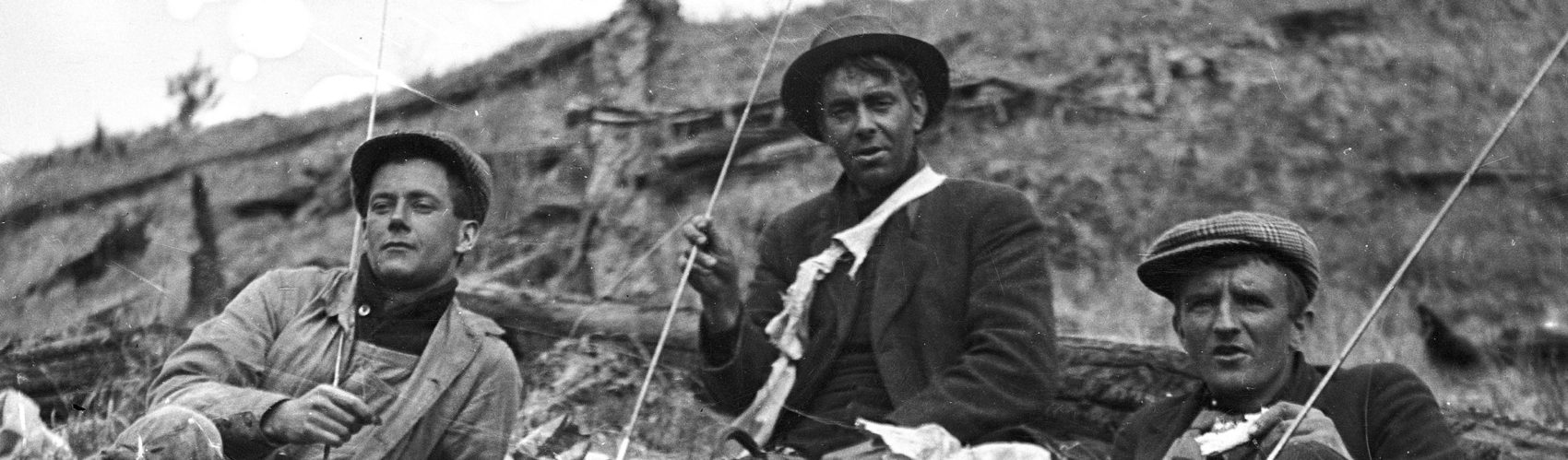
Tag Archives: maple syrup

Chapter 6: More Memories of Teaching Years

Ashby’s Memories — Teaching Again at Jarvisville

I taught in Jarvisville eight years, and my pupils were considered excellent in junior high and high school at Bristol in both scholastics and athletics. Jarvisville won so many scholastic ribbons at the Field Meets that they quit publishing the results and then quit the contests. My 4-H Club was great, as was my Boy Scout Troop. We had wonderful times at Camp Mohonagan and other places.

Ball Teams at Jarvisville.

I had one, among many, special school-softball games. The coach of West Milford High School brought the sixth grade softball team over. They were fine-looking boys. I had to have fourth and fifth graders and even three girls on our team. We played across the schoolyard fence in Bill Jarvis’ meadow. (Mr. Jarvis always let us play there.) Mr. West, the coach, insisted that he umpire because it was difficult for me to get through the fence. Mr. West umpired from behind the pitcher and coached his pitcher but didn’t help mine. I was sure he missed calls at home plate in his favor. Some of them I didn’t even think were close. Even after all that, we beat them 10 to 9.

I had the presidency of the men’s softball league, and I had a lot of success with a women’s softball team. We were blessed with outstanding athletic families: Myers, Stutlers, Jarvises, Posts, and Westfalls. In different end-of-the-season Jackson’s Mill Roundups, we won in girls’ softball and men’s volleyball. One special time during the second World War, we had such a hard time getting a team; but we won two 1-0 games of men’s softball in one day.

Teaching at Laurel Run

In the year 1947-1948, I went to the Laurel Run one-room school. You might be interested in hearing how I came to be moved. I did not ask to be moved. There had been a small group watching for me to make a mistake from the time I first went to Jarvisville. (I’ve heard that if you don’t have opposition, you are not doing anything.) Once the buildings superintendent came stomping into my room during a class. (He didn’t even knock.) He said, “Get the front door open.” I said, “Let’s go outside and talk.”

He went outside, and I explained that we had our kitchen in the primary room where it disturbed the classes and that the P.T.A. had put it in our hall. He saw the need of a kitchen and promised to build one, which he did while we used the one in the hall. That really cooked the opposition.

The last straw that made the county superintendent move me occurred when I wouldn’t promote a boy into my room. His mother was the daughter of an important doctor in Clarksburg. He and the superintendent were members of the same club. So I was moved and the boy was transferred to Bristol Grade School.

That move was one of the best things that ever happened to me. The day school started, the principal of Bristol Grade School came and asked me to teach all his arithmetic classes and nothing else if I would get my one-room school to go with me. I didn’t accept or even mention it to the parents, although that was the job I had always wanted.

My twelve years at Laurel Run were full to overflowing with pleasure and successes. The parents and community were enthusiastically behind and with me. We had a 4-H Club, a Boy Scout Troop, a wonderful hot lunch program and a great P.T.A. Our sixth-grade graduates did great in their adult lives.

4-H Clubs.

Usually all of my eligible pupils belonged to the 4-H Club. The girls usually took the same projects–like cooking, sewing, or craft. The boys took woodworking, gardening, and birds, mostly. They won lots of first-, second-, and third-place ribbons, which made them, me, and the community very proud. I remember one year when a lot of them had bird projects. We had a bird feeder against a window, and the birds became very friendly. The boys took pictures of many kinds of birds eating and put them in their project circulars. I remember once my girls in the craft class made each of their mothers a Tom Thumb change purse of leather, and the boys made their daddies each a key case.

Boy Scouts.

Our Boy Scout Troop was equally successful. My son, Ashby Bond, was their scout master after I decided they needed more hill climbing than I could give them. Later a great community man, Cecil Fultz, was scout master. I was always on the Executive Board and often took them to camps like Mohonagan. These scouts made real successful men. One is a high school principal in Cleveland, Ohio. Another is high school coach in the Eastern Panhandle of West Virginia. Another has traveled all over the world (some of the time in a submarine). He was a communications officer, having charge of building an observatory in Alaska and retiring from the Naval Observatory in West Virginia. One of my 4-H girls graduated from Salem College Cum Laude and is in charge of a library in Detroit, Michigan. I am extra proud of this girl because I started her as a wee-tiny first grader and had her through the sixth grade.

Hot lunch program.

Our hot lunch program was a success mostly because the proof is in the eating and my wife, Ruth, cooked it the very best. The community (through their P.T.A.) furnished all the utensils we needed. I made the menus, using all the government-furnished food we could get. This use of free food let me charge 10 cents per pupil for the first child in each family; for each child after the first in each family, the charge was 5 cents. Besides, some families ate free because of their financial status.

I must tell you how I got all my pupils to like at least fairly well everything Ruth fixed. The children watched Ruth fill their trays. They got at least a tablespoon of each thing on the menu. If they thought they might not like a food, they only took a small tablespoon of it. When their trays were cleaned, they could get more of anything, as long as there was any left. I never allowed discussions about not liking any food, and it was amazing how many pupils learned to love foods they never liked before.

I used two special awards for cleaning the trays. Children who had their trays clean could go play after 20 minutes from the time we started to eat. All who could not clean their trays had to wait 10 more minutes. If all of the pupils cleaned their trays, we celebrated with a ciphering match or some other loved activity, like map-match, etc. We had to celebrate often, and a teacup would almost always hold the leftover food. Parents often asked Ruth for her recipes, and now and then a former pupil calls or comes to ask her for some recipe.

Special community affairs.

We had many community gatherings. At most of the holidays, we would have programs and a covered-dish meal. One of the special holidays was Easter, when the community would come in. Some of the patrons (led by a grandpa of one of my boy pupils, Ora Stutler) would hide eggs and candy for an egg hunt. They had a definite area of about an acre for preschool children only. We had regular P.T.A. meetings and special 4-H and Scout celebrations. It was an awful thing to give up all these community ties when they consolidated our school at Salem and sent me to West Milford.

Teaching at West Milford

I was hired to teach the fourth grade; but when I got there, they gave me a fourth and fifth grade combination. In those days, the Board did not seem to consider the teacher’s needs at all. I soon learned to like my pupils, their parents, and my principal (Mr. Laughlin). I especially loved my location and building. The building had been a two-story home, and it sat on top of a knoll separated from the main high school and grade building. We even had a private yard and the football field for a playground. In the upper story, a close friend of mine (Kester Fiddler) taught high school science. He told me when I first went there that if I needed anything to just let him know.

The second year they let me keep the same pupils as fifth and sixth graders. My parents asked for that, which made me very proud. I also talked my principal into letting us have a softball and volleyball league with each fourth, fifth, and sixth grade belonging. Every other teacher was a lady, and some didn’t like the league idea, but their pupils loved it. We did that two years; then the Board hired Mr. McLaughlin to be the high school superintendent.

This move of Principal McLaughlin (who had furnished my room with the teaching aids I needed and supported me in every other way) was a terrible loss to me. Mr. Hess, my new principal, would not allow me to use any extra texts. (He also stopped our inter-grade athletic contests.) The trouble was that I would have pupils who needed first-, second-, and third-grade texts in order to be able to read in them and learn from them. Of course, I made do with what supplementary texts I could find, but it would have been better with the principal’s cooperation.

The second year that Mr. Hess was principal (which was iiy fifth year at West Milford) I had to move out of the hilltop house because they were tearing it down to build a new school building. I also got only fourth-grade pupils, which meant I got all new pupils each year. This meant I had to teach all of them to prepare lessons at study time and keep order so all could do their thing. This took paddlings or other punishment for the first month or so.

It was not all trouble. We had a basement room with an empty room adjoining that we used in bad weather for games such as dancing and relay games. We also had the high school gym (because they had been moved to a new building) one period a day for recreation. This gym was a great place for singing games, leap frog, some gymnastics (especially tumbling), basketball drills, and some calisthenics each day. The other teachers had a high school pupil give their class calisthenics at their period in the gym. I always thought a child got better exercise from games and that they learned from them too.

This effort of mine to give my pupils clean supervised play (instead of their running over others or being run over or forming gangs to run over those they couldn’t run over by themselves), alone with my having the principal’s only child in my room, caused my principal to come stomping into my room at opening exercise time one morning about one month before the end of my last year of school teaching. I tried to greet him friend-like, but he went to ranting and throwing his arms through the air, accusing me of not teaching anything but ball for the last two months. When I tried to get him to listen to the pupils’ ideas of what I had taught, he would not let them talk. Instead he just stomped out.

I had to teach all day while I was the maddest I think I ever was in my life. As soon as school was out, I went to the superintendent’s office to get a hearing on Mr. Hess’s accusation. They (the superintendent and the grade school supervisor) explained at great lenpth that my principal would apologize. He did apologize, and my pupils’ parents gave me a tackle box full of baits at our Last-School-Day Picnic. Also, my principal and my co-teachers gave me a fine folding chair as a going-away present. I retired at the end of the school year in May, 1966.


Ruth’s Memories — Community Spirit

There was a lot of “Community Spirit” in those days. Ashby organized a men’s softball league (usually six or eight different communities). Each team usually had one home game and one away each week (on Sunday afternoon and one week-day evening). All the communities were well supported.

About every Sunday morning during ball season, some of the local fans gathered here with stuff to make ice cream and lemonade to sell at the ball game in the afternoon. That is how they got money to buy equipment. Some communities were lucky enough to find some business to sponsor them and furnish what they needed.

They still have softball leagues, but they are on such a large scale that there is nothings personal about them. The big thrill is gone.

The same thing happened to our one-room schools. When the school was closed and the children were sent farther away, a bit of the heart of each community was crushed. There were four schools on Turtle Tree Fork of Ten Mile Creek when we first moved here, and in 1960 there were none.

Summer of 1945

In May 1945, Bond was called to serve his country. He was sent to Camp Hood in Texas. Brother Ian had been called to service as a medical doctor. He was near Lake Dallas–also in Texas.

Xenia Lee and Edgar were married in August of that year. Since it was wartime, the gasoline was rationed. Ed tried to get gasoline to drive to his home in Kansas, but could not. So he left his car here, and they went by train. They had been at his home only a short time when the war was over and the ration was lifted. They wrote that if we would bring the car to them, they would take us to Texas to see Bond and Uncle Ian.

Since Ashby was a school teacher, there was little income in the summer. A good neighbor, Vivian Post, lived just down the road from us. (We quilted quilts together in the winter time, and she visited us often in the summer.) She was here when the letter cane from Ed and Xenia Lee. I said, jokingly, “If you will loan us $100, we will take the car to them.” She said, “If you will take me to the bank, I will get it for you.” I was really shocked, as I was just kidding. She insisted, so we decided to go. We were on our way by afternoon!

Ashby was afraid the car might break down, so he would not let me drive over 45 miles per hour. We made it with no problems. They were ready to go, so with little delay we were on our way to Texas.

We located the hospital where Ian worked. He wanted to show us around some before taking us to his home. It really was hot and dry. Ashby thought he would wait for us in the car. By the time we got back, he really had a sick headache. Ian’s home was on a lake with lots of trees around, so Ashby soon recovered. Bond arrived the next day. It was so good to see him again.

We went fishing in a small boat on the lake. We did not need poles. We would bait the hooks and let the line down in the water by the boat, then wrap the other end around a finger. Sometimes we would feel a little quiver and pull up the line. We caught a few fish–but none to brag about. It was fun, anyway.

The next day we took Bond back to camp and started on our way back home. We took the southern route and stopped in Cleveland, Tennessee, to see Avis and family. We made better time coming home (only had tire trouble once, and that close to a filling station).

It was good to be back home. The tomatoes had just started ripening when we left; and when we got back, the children had canned over one hundred quarts. They proved they could “keep house.”

Car Accident in.December, 1945

Bond got home on “Leave” before Christmas that year. It was real winter, and the roads were icy. Alois, Mae, and I started to Clarksburg to meet him about nine o’clock at night. Before we got there, the tire chain got broken and wrapped around the axle. We had to stop, and Alois went to work getting the chain loose. He was almost finished when a car going east met a car going west. That blinded the driver, and he did not see our car–so he ran into the back of our car, running over Alois. Other cars were soon there; and before I knew it, someone had Alois in his car to take him to the hospital. Mae went with him, and I stayed with the car, waiting for the State Police. I guess they were busy elsewhere, because they did not come. After a while Lyle Dennison came along and took me to the hospital. We had Bond paged at the train stop to tell him to come to the hospital. Lyle took Bond and Mae home, and I stayed with Alois. X-rays showed a broken pelvis and also broken loose from the spine.

Bond went to Weston to see Ruby the next day. They decided to get married on Christmas Eve. After close to a year in Germany, Bond returned home in time for Christmas the next year.

Alois recovered in due time and later served a time in Korea.

Lydia’s Illness

In 1956 while Ashby was teaching at Laurel Run, Aunt Lydia was having her last bout with cancer. Aunt Susie took care of her and Aunt Ada did the house work. As soon as I could get lunch over and dishes washed at school, I went to Salem and took care of Aunt Lydia while Aunt Susie went to bed. After Aunt Ada finished her evening work, she took care of Aunt Lydia until Aunt Susie got up; I came home. Ashby rode the school bus home. Beth got supper. Edna Ruth was staying here at the last expecting Tim any time. She often went with me so I did not have to drive home alone. Aunt Lydia often said, “It’s a good thing there were four of us girls–one to be sick and three to care for her.” We were glad we could care for her at home.

More Neighbors, and Deer Hunting

Ray and Anna Lou Shay were close neighbors for a time. He loved softball and hunting. His home was at Newburg (a good place for deer). That deer season Ashby got someone to teach for him, and we went to Newburg with Ray and Anna Lou.

At the time the ground was bare, but it was cold. That night snow came, and by morning there was close to a foot of snow. That just suited the hunters, but it was not so good for Ashby on crutches. We were able to drive near to a good “stand.” It was really cold, so someone got a fire started. There was lots of firewood around, but it had to be cut up. That became my job–to cut wood and keep the fire going. They would come in to get warm, then go on another drive. They had some excitement a few times, and the guns roared–but no one got a deer. No deer came in sight of us (Ashby thought it might be because of the fire). We had a good time, anyway!

After that, when it was real cold, we learned to heat bricks and wrap them up well for Ashby to put his foot on. Then we wrapped blankets around him and his chair, leaving room to get his hands out. We put a card table in front of him for his gun and ammunition.

Ashby did get one deer finally. He has not been deer hunting for a long time. The weather is not right for us any more.

Ashby as an Outdoorsman

Ashby was always a lover of the big outdoors. He never stayed in the house when he could be out in the fields or woods. He knew the trees by the shape of their leaves and by their bark. Many he recognized as far away as he could see. He knew the birds he saw, and many he recognized by their song or tone of voice.

Ashby also loved to hunt. He was satisfied with just enough for one meal. It was a big blow when he could not get out alone. I made up for it as much as I could. I just fit under his left arm, and I used his crutch to help keep my balance. Many times I helped him up the hill into the woods to watch for squirrels. At first I went back to the house to work, but I found that was not good. He would shoot a squirrel or two;, and by the time I got back, I could not find them in the leaves. He did not get to go as often as he would like; but when he did, I stayed with him and.enjoyed “the great outdoors” too.

After Ashby got his “Wheel Horse” and cart, I loaded his supplies in the cart and he drove his tractor around the road back on the hill while I walked. He drove the tractor as close as he could to good hunting, and I helped him the rest of the way. I had many pleasant hours in the woods, too. Maybe that has helped to keep us healthy. Anyway, this has been a good life.

Since we had the pond made in 1963, Ashby has had a good place to fish while he enjoys the wildlife that comes around to keep him company.

Some of My Activities When Ashby Taught at West Milford

It was a great day when Ashby was transferred to West Milford. It is only a mile from Aunt Susie’s. I usually went with him and then went on to Aunt Susie’s. Aunt Ada was living with her. Part of the time Aunt Susie was working caring for the sick in their home. I helped with whatever needed to be done.

When we could, I took Aunt Ada to see old friends around home near Roanoke, a cousin on Indian Fork, friends in Weston, and old friends of Aunt Ada’s around Lost Greek. (She had kept house for Uncle Orson back in 1916 and 1917 when he managed the Van Horn Farm three miles from Lost Greek.) (By the way, that was the farm where my grandmother was born and reared.) It was great fun for me to hear their tales. They enjoyed old memories very much. When Aunt Susie was at home, she went with us. I was always back by the time Ashby was ready to leave school.

When Aunt Ada heard Ashby was retiring, she said, “Shoot! I’ll never get to go any place again.” She was about right.

Combined Memories of Farm Products — Regular Farm Products

In the 1930′s Papa and Mama Bond began selling whole milk. They had been separating the milk and selling cream. They gave us the hand machine that separated the cream from the milk. We had three cows and got the fourth one. That made us a little income to help with expenses, and the skim milk raised good pigs to help with the meat supply. We kept a few chickens and butchered a beef every year. We always raised a garden and canned lots of food.

Maple Syrup

One spring we decided to make use of the maple trees around the house. Ashby found some sumac an inch or so through and cut them in one-foot lengths. About four inches from one end, he would saw half way through, then split it off. He cleaned the pith out where it was split and punched the rest out. He rounded the end to fit the size of the auger he used to bore a hole two or three inches deep in the tree. The spile was put in the hole and tamped to fit tight so the sap would have to flow through the spile. Three or more spiles were put in each tree, depending on its size. A bucket was placed under each spile. Some trees had sweeter sap than others–also more of it. As much as two and a half gallon bucket might be filled in eight hours or so. We had free gas, so I boiled it down in a five gallon pot on the kitchen stove. After it started to boil, I heated sap in a gallon pot to fill in so it never stopped boiling. It took ten to twelve gallons of sap to make a quart of syrup. One had to watch closely when it was nearing the end or it would boil over. Sound like work? Not really. The maple syrup was worth it.

Sassafras Tea

Another thing we used to do in February was to dig sassafras roots to make tea. The small roots were cut in small pieces. On the larger roots, we peeled off the bark. Some of that cooked in maple sap needed no other sweetening.

Cane Molasses

Another thing we used to grow was cane to make molasses. Now, that was almost work. The seeds were tiny, and some did not grow so one planted several seeds in a hill two feet apart. Then it had to be thinned to leave three stalks to a hill. Of course, it had to be cultivated. Just before frost the blades had to be stripped and the seed stem cut off. Then the stalks were cut near the ground to save all the sap possible. The cane heads were fed to the chickens.

After the cane was stripped of seeds and blades, it had to be hauled to the squeezing mill. This mill had two heavy steel rollers fastened to a long pole which turned the rollers so they sucked or guided two or three stalks between them to squeeze the juice out and into a tub. It was a job that kept one person busy feeding that mill. Mostly we fastened a horse to the long pole so that it went round and round pulling the pole. Once we let Alois drive a car to pull the pole that made the rollers turn and squeeze the cane. That was the beginning of Alois’ driving, which he has done a lot of.

(I almost left the cane juice in that tub; but I was afraid you might taste that juice, which would be quite bitter.) The making of molasses took a lot more work. Wood had to be gathered and an oven built for a pan (or an evaporator) to boil the sap down in. While it was boiling, it had to be skimmed off with a paddle as fast as the thick scum formed. Then a special person with skill and experience (Ruth) had to keep testing the boiling mass to determine when it was good molasses so it could be put in half-gallon glass jars. The proof of the molasses tastiness was in mashing a lump of butter (about a tablespoon heaping full) into two tablespoons of molasses and spreading it over a hot pancake and eating it.

During all the boiling, a skilled fire-keeper had to feed the fire just at the right place and the correct amount to keep the sap boiling without foaming over the sides. This was done by feeding the new wood to the edges of the fire, keeping the fire in the middle. Susie’s family usually grew cane when we did, so we worked together in making molasses. Our boys hated that job, so we quit growing cane. We did not quit working together when either had a big job to do.

Blackberrying

Blackberries were plentiful then, and we tried to can at least 100 quarts–and some juice for jelly. (Now, around here anyway, the blackberries have a kind of blight that keeps them from maturing.) When berries were plentiful, we used to pick several gallons and sell at $1 per gallon. That helped when money was scarce in the summer time.

Strawberries at Susie’s

After Everett passed away and Lee and Charles were working away from home, we used to go to Susie’s and help out when she had a big job to do. Then they would help us out when we needed it. One year they had a big patch of strawberries. Every two days the berries had to be picked. Ashby saw that no dirt or bad berries were among them as he put them in baskets ready for market. The damaged ones we made use of.

Huckleberries

One summer a neighbor said that if we would pick six gallons of wild huckleberries for him we could have the rest of the crop. We picked the six gallons so quickly and the patch was so big that Susie’s came to help us. It took two or three days to pick the ripe ones, and then in a few days we had to pick them again. One could set a bucket under a branch and almost shake the ripe ones off. That made them hard to clean. Ashby worked at that until we got them picked; then we all helped. We sold a lot of gallons at $1 per gallon, besides all we canned for ourselves. We kept account of the gallons we picked until it passed the 100-gallon mark. We picked some to eat after that.

Apples and Applebutter

One fall when Grandpa Randolph had a bumper crop of apples, we got a truckload. Besides both families canning applesauce, we made over forty gallons of applebutter. We got the apples ready to cook the day before. We had a 24-gallon kettle with a frame for it to set in about a foot from the ground. We would fill the kettle 3/4 full of cut apples, add 1/2 gallon of vinegar and enough water to come half way up on the apples. We liked to use dead apple wood when we could get it for that burned well and made a hot fire. We put some silver coins in the bottom of the kettle for that helped keep the apples from sticking to the bottom. We cut the wood in short strips so it would not burn up on the sides of the kettle. Then we kept adding new wood from the side so the hot coals kept it cooking all the time. As soon as the apples started cooking, we began to stir them with a long-handled paddle that was solidly secured, something like this illustration.

One stirred all around the side of the kettle, then back and forth across the middle, constantly, to keep the apples from sticking. As they cooked down, more cut apples were added until the kettle was about 3/4 full. Then sugar was added, three pounds for each gallon of applebutter. We kept stirring until a spoon of applebutter in a flat dish left a mark when one ran the tip of a spoon through it. Then the fire had to be removed, oil of cinnamon added and well stirred again, the jars filled and sealed. That sound like a hard job? We loved it. We tried to find a shady place to sit and stir.

One time a neighbor, Bytha Davis, went with me up to Grandpa Randolph’s when Grandma was there. We got there before noon. Grandma had enough apples ready to put on to cook for applebutter. We made that in the afternoon. Then we got apples ready that evening to make another kettle of butter the next morning. We came home in the afternoon. She often told me she never worked so hard in her life. I told her that was just an average day for me.

Chapter 3: Young Adults–Education, Work, and Early Teaching

Ashby’s Memories

A Year in New York — Work at the garage and taxi company in Olean.

The following fall of 1917 I went to Olean, New York, to work in a combination garage and taxi company. It belonged to my Uncle Gene Jordon, the same one who had Romulus and the gobbler. (I never went to school two consecutive years after I finished the eighth grade.)

At this garage I learned to vulcanize tires and tubes, repair carburetors, and disassemble cars for Uncle Gene to work on. I worked at night, all night, taking calls for the taxis when they came in and working between calls.

One night a driver brought his taxi to the door and got another. I was trying to start it and get it into the garage. It would start and then stop. I would crank it again (all cars had to be cranked then). I kept that up until it must have gotten mad–for it kicked me, breaking my arm. This was about 2 a.m. I went to the trolley office less than a block away and tried to get the phone lady to call a doctor for me, but she couldn’t. A conductor who was standing near enough to hear took me on his freight car to within a block of the home of a doctor. The house had a long porch. I paced back and forth on it, knocking on each door as I passed. Finally the doctor asked me into his office. We sat down, facing each other. We put our knees together, and both pulled. My fist was doubled back toward my elbow, so we had to pull a lot to get it set. He bandaged a plaster cast to my arm. This worked wonderfully so I could take calls and get half pay from Uncle Gene and half from Workmen’s Compensation.

The only trouble was that it was difficult at first to write with my left hand. I had never done that, but I had thrown lots of rocks with my left hand when my arm was in a sling after falling off Tony. I soon had lots of practice. Besides taking taxi calls, I wrote letters each week to Mom and a lady friend at Oneal, West Virginia.

This was an unusually cold winter. I liked the snow and ice; I skated to and from my rooming place right on the street. There was one place I would stop and feed the gray squirrels. Often they would climb up my overcoat and down into my pocket to get nuts. Sometimes I would skate on the Little Genesee River or the city reservoir.

You might be interested to hear about the first time I drove a car outside of the garage and parking lot. It was after midnight on a bitter cold night. They said it was 45 degrees below zero. A driver came in with his taxi stuck on a side road. I went back with him in one of our other cars. We got his car out, and I drove it back. I had to start it out down grade. When I let it into high gear, it started sliding; but I got it straightened out like I had heard the drivers explain. I came to a railroad crossing and had to get out to see whether a train was coming. My windshield was practically all frosted over. I made it to the garage, but both my feet were frozen.

Work on a farm near Friendship.

About the first of March Uncle Gene sold his garage and went back to his farm near Friendship, New York. That was the same farm where Romulus saved me from the gobbler. Here I found dairy cows to milk and a lovable pair of black horses to use. The horses reminded me of Tony (my colt that I had to leave at Berea). One special thing I remember besides how well they worked was that one of them would quiver her lips and act like she was laughing when I would harness or unharness her and rub her neck and shoulders.

I was so busy at Uncle Gene and Aunt Cleo’s that I didn’t have time for girls except to find out that my childhood sweetheart, Agnes Childs, was away in college. While there, I helped put in oats and potatoes, built fence, cut firewood for boiling maple sap into syrup, hauled the wood, then hauled the sap (after cleaning 1,500 spiles and buckets, as well as tapping the trees). Besides all that, after we milked each day, I hauled the milk to the cheese factory and brought whey back for the hogs.

It wasn’t all work. Often as Uncle Gene finished the last batch of syrup, he would boil some so hard that it would make taffy when we poured it on snow. Other times Aunt Cleo boiled it down so that when we beat it in a saucer with a spoon it would turn white as it cooled and make the smoothest, best candy you ever tasted. Another pleasure there was Aunt Cleo’s wonderful meals. She even fixed us a big mess of leeks.

Perhaps my maple syrup making at Uncle Gene’s might interest you. The winter of 1917 and 1918 had been the worst the old folks had ever seen, so they said. When I hauled the wood to the sugar house, my horses and sled rode right over fences and stumps just as though they were not there because the snow had not melted from October on. It would start to melt, then crust over.

Uncle Gene’s method of boiling the sap was different. He used a drilling boiler with a coil of pipe in an 18-inch-deep pan about 2 feet wide by 12 feet long. I drove my wonderful young black team hitched to a sled with a 75-gallon tank out through the woods, which they called a sugar bush. As I drove from tree to tree gathering the sap, I would get a cold drink from the especially good trees. When I came to the little creek with a bed of leeks beside it, I would pull a few, swish them in the water to wash off the dirt, and then chomp the best bite out of each. I located a bee tree but never got back to cut it.

Uncle Alvie’s in Alfred, New York.

When the sugar bush was finished I decided to go home. But first, I wanted to see Uncle Alvie, Aunt Mary, and especially my cousin Vida (I had written to her some, before leaving New York). I put my suitcase on my bike and rode on a hot tarry road to their farm near Alfred, which was about 35 miles.

They all seemed very glad to see me. Even Elizabeth and Lowell were there. In some queer way, Lowell was glad to see me; and Elizabeth took a genuine interest in me, as she did during my entire stay.

The next morning, as I was washing for breakfast, I saw excitement in the road. A cow was running toward Alfred. When I spied a big bull following her, I jumped out the kitchen door. Cutting across the field, I got ahead of the bull. I picked up a good rock. When he got where I couldn’t miss him, I threatened him; so he turned and went back to his stall in the barn.

When I started getting ready to go home to West Virginia, Uncle Alvie asked me to stay with him through the summer. I had supposed Lowell would help him–but not so; he was going off to school. Aunt Mary and Elizabeth also begged me to stay, so I stayed.

It was a pleasant, busy, and educational summer. Uncle Alvie was one of the best farmers in New York and was the head of their Farm Bureau. He had a registered herd of Holsteins that he had built. He also developed his own strain of potatoes and sold seed potatoes.

During the summer I plowed (with three horses and a sulky plow) about twenty acres of buckwheat and planted it. I took care of seven acres of potatoes, beginning with planting, them with three horses pulling a planter. We also put about eighty-five tons of hay in the barn. Uncle Alvie taught me to load the wagon so that practically every straw went up to the hay mow with a horse-drawn two-pronged fork that I set in the hay.

Besides all that, which I enjoyed most of the time, I drove their two-seated 1917 Ford practically everywhere it went because Aunt Mary liked my driving. Each Sabbath we went to church at Alfred. Once I went to a box supper at the Grange. Later I took the lady whose box I bought to a party about three miles back at Five Corners in a livery-rented buggy pulled by a spirited horse.

Back To Salem, West Virginia

The middle of August came. School would start soon, so back home to Salem I went. I went back to Salem College Academy for my sophomore year. It was a pretty busy year, with milking 10 to 12 cows and caring for the milk and cows. I also had some school work, besides playing basketball.

Getting Acquainted with Ruth

The commencement of 1919 was a very special one because that was when I first really got to know the queen I mentioned seeing when I was 12 years old. I remember two things quite well about our meetings. Two other couples with Ruth and me went on the hill opposite the college, where we ate a lunch. After the lunch, Ruth got up on the stump and recited a reading called, “Woodticks.” (This poem is included in the appendix of this book.) We attended many of the commencement entertainments together.

The other thing I especially remember was bringing the cows down the hill on Evander Randolph’s farm and seeing Ruth at her place on the opposite hill. We waved at each other quite a few times. Ruth was graduating from Short Normal. When the graduation was over and she was leaving on the train, she agreed to write. That made me very happy.

These letters made my life as I helped Brady run Evander Randolph’s farm for him on the halves. The summer and until late November was full of cows, hogs, fruit, corn, etc.–a very interesting year of farming. Along in the last of August, Ruth decided I was getting too serious, so she called off our writing but said we could be friends. For a long time, that seemed like the world had come to an end.

Farm and Other Work During 1919-1920

The farm, with silos to fill for us and other farmers, 85 hogs to butcher and peddle the meat, and the cows to take care of kept me so busy I did not go to school the winter of 1919-1920.

After our farming year was over in November, I got a job building railroad out of Sutton, West Virginia. We built a road up Wolf Creek to a big coal mine. When that was over, Brady and I took contracts of timber-cutting, for a chemical company. We cut out the logs, then all the hardwood. We made the limbs into chemical wood, which took a lot of splitting. Brady and I worked together until Dad finished his school term. Then Brady got a job in a store in Sutton, and Dad came to live with me in our tent (where Brady and I had lived).

While Brady and I cut timber, I lived by myself each weekend. Our tent was more than a mile back in the woods up Slide Hollow from the railroad. The first weekend I got a scare. I had barely gotten to sleep when a screaming sound awakened me. I arose hurriedly and started reviving my fire. Another scream seemed closer; I hurried the fire-making. I expected to hear or see it close any time. After getting a big fire going, I cut a nice club and laid it by the side of my cot, just where my hand would grab it. I was soon asleep. Sometime later I woke with a start. Hot breath was in my face; a rough tongue, also. When I moved, I heard a patter of feet. I threw the club at the sound; the yelp that followed made me know it was a dog. The dog didn’t make the scream. I soon learned that it was a barred owl. She would scream in the big trees near our tent. Other owls would gather and give us a concert of screaming, hooting, coarse-voiced laughing, and cracking their bills.

Another scary time was the Easter Sunday weekend. Some drunk guys from the little railroad station tried scaring me by scratching the bark of trees and making animal sounds. I kept very quiet with my shotgun handy. They went away.

During the spring while Dad was with me, we often heard wild gobblers in the mornings. I found a bee tree, and Dad helped me take two buckets of honey–that helped our eating, even if the most of it was old and black.

When I got sick during the hot summer (probably July), Dad went back home to Mom and Elmo at Salem. When I recovered, I got a job with a surveying crew setting grade stakes, etc., for the new road between Bulltown and Sutton.

Back to School in Salem

I went home in early September when I got a job delivering lumber with a Ford truck for Evander Randolph’s Lumber Supply Company. I kept that job until October, when I started my junior year at the Academy. It was a rather dull year of school. I did my school work and was on the school basketball team.

The spring of 1921, after school was out, Russell Jett and I sold books around New Castle, Pennsylvania. When the books were delivered, I got a truck-driving job hauling for the Ross and Jennings Company. We graded and built the road from Salem to the Dodridge County line on Route 50. We also built Route 23 from Salem to the county line.

This fall I went to football camp at Jackson’s trill for two weeks before school started. This was the first such camp at Jackson’s Mill. The next year West Virginia University took it over for their football camp and began building the State 4-H Camp that has become nationally and internationally known. (I guess Ruth had a 4-H club camp there the summer before our football camp.)

My senior school year was quite eventful. Our football season was very successful, especially since we beat our arch rival Wesleyan. I had the job of janitoring the whole college (which was only two buildings). Besides the football, janitoring, and regular school subjects, four couples of us had a Rook Club that met each week. The graduation of our 1922 Academy class was a special time. It was my second graduation on that stage. I missed my queen at this commencement. She had been at commencement my junior year, and she and my sister, Avis, went on a picnic with me in my 1911 Ford roadster.

My First School

After a summer of truck driving for Ross and Jennie Construction, I got a temporary certificate and taught my first school at a rural one-room school. It was the Hannah School, four miles from Wallace. My pay was $75 per month for seven months. I had 27 pupils in the first through ninth grades. One 16-year-old girl had passed the eighth grade exam three times, so I put her in freshmen high school subjects. She already knew more than I did about the eighth grade.

Because of this wonderful year of teaching, I decided to prepare to be a teacher. I went back to Salem College the fall of 1923. Because I realized the need of a good education, I made school my whole job.

More About Sports

Because of the jobs, I had very little time for some sports I loved–tennis, football, and ice skating, especially. I must tell you about one gratifying tennis match.

Tennis with Jennings Randolph.

I had played some tennis while in the Scouts when I was 12 and 13 years old. We had a court near the mouth of Pennsylvania Avenue. When I could borrow a racket, I played with Russell Jett, Squinty Bumgardner, and Jennings Randolph, among others. When I returned to Salem College Academy, I borrowed a racket and played Jennings a set of tennis.

It was a mighty hot match. We had opposite styles. I used power; and Jennings used careful, patient finesse. It was queer how my strokes came back to me, even though I had not played for over two years and Jennings had the best racket money could buy. I got the momentum with my powerful serve and kept it with my power in every stroke. As the years passed, I enjoyed that win more and more because Jennings became the junior tennis champion of West Virginia and was on the college team that was champion of West Virginia.

My First Year at Salem College

The summer of 1923 I drove truck for a cement block factory. In those days Salem College didn’t get the schedules straightened out and books ordered and received until about the middle of October, so I worked until then. My school year was the best I had ever had. My grades were practically all A’s. (Before this, my grades were mostly C’s with an occasional B on math or science.) There were not many elective courses in an education major, but I took all I could of science and math.

During my first year of college, I had two courses that were special: one was Agricultural Geology, and the other was Caesar.

A distant cousin, Miss Mildred Randolph, taught my geology class (in which I got A’s all the time). About the end of the year, she had to return home because of her father’s health. President Bond asked me to teach the class as well as make out and grade the tests. (This was especially gratifying to me because I had flunked a six-week period in geology to Ernest Sutton and had quit it after telling him he would never see me in his classroom again.)

As I said, I took Caesar to Miss Elsie Bond. I had been interested in Roman stories from the fourth grade on, but I realized that this course would be difficult since I didn’t finish my Latin course the year I left school to work on a farm. (I made mostly A’s in this course, too.)

Teaching For Avis

Avis was teaching her first school at Sycamore between Wallace and Center Point. During my vacation I gave Avis a week’s vacation by teaching for her. It was a wonderfully pleasant experience with extremely nice pupils, and the people I boarded with were so nice.

Two incidents might interest you. One evening after school two Swiger boys, Archie and his cousin, wanted to wrestle with me. It was a crazy thing for me to do, but as usual I couldn’t take a dare. Although they gave me all the competition I wanted, we came through as very good friends. Archie later married my sister, Avis. We have been special friends and still are.

The other incident involved getting Avis back to her rooming place. I walked to Wallace, about four miles, and hired two riding horses at the livery stable. I met Avis at the train, and we had an uneventful and pleasant ride to her room. They gave us a great feed for supper. Then I started back to Wallace, riding one horse and leading the other.

Everything went fine until I crossed the hill at the head of Sycamore on the Wallace side. There I found the road partly frozen and the mud deep. The horses began breaking the frozen top of the mud. I found it better for them to walk along the edge of the road. I was making it fairly nicely, even though it was pitch black dark and I had no light. All of a sudden the lead horse broke away from me; she had broken over the batik into a ravine. The horse I was riding was excited and began nickering. I went down to the other horse and found it caught under a pipeline. I couldn’t get it out, so I rode to the livery stable (about one-half mile). The owner and I came back in a buggy with tools. We got her out, and she was all right except a little stiff. It was gratifying after the scare and hard work to see the two horses enjoy being together again!

Teaching in Taylor County

In the summer of 1924, I got a job teaching the Astor two-room elementary school in Taylor County on an emergency certificate. I was the principal and taught grades 4-8.

That year was a special one for me for many reasons. I had a most wonderful place to board, although it cost me $45 a month of my $95 salary. I had a lot of great pupils. In fact, they were all great! (One is the president of the Clarksburg bank where I deal.) Besides the subjects (I helped them all I could on them), I trained them for a field meet at Flemington. They made me very proud by taking lots of ribbons.

A card from Ruth.

About Christmas time 1924 1 got a card from my Queen Ruth. I was so happy I jumped up and down a while. Mrs. Bailey, my landlady, always called Ruth my “jumping girl.” Soon we were writing every day.

Mining Jobs

When school was out, I got a job at the Blocky Pittsburgh No. 2 Mine. My first job was catching coal cars when they came down the hill to the tipple. The very first day I unloaded a railroad car of baled hay between times when I was catching the mine coal cars. At quitting time I would have been happy to quit, but the superintendent asked me to help pile the bales as high as my head and higher in the barn–so I did. The second day I thought I would do well to get through the day, but I unloaded steel rails in my spare moments.

Later I got the job of weighing the coal and dumping it into the shaker to grade it. While I was doing that job, one day I went under the tipple to start a railroad car for the loader down there. The car behind it started and caught me between it and the tipple. I yelled! My buddy, Charles Bailey, was tearing parts of the tipple off to get me out before the loader got the cars stopped.

After I recuperated a little (a day or two), my super loaned me his Ford Roadster to get Ruth at Clarksburg and take her to some of her folks at Salem (her Aunt Doc)–and I went to my home. The next day we took a trip to Elkins with another couple. My ribs healed rapidly.

Before I went back to school (late as usual), I got a job guarding the mine. (our Super had gone scab with a much bigger union mine not two miles away.) The guard job paid more money; besides I gave out the workers’ supplies as they came to the mine each morning.

This work was at night. I slept daytime (that is, some of the daytime). One day I went to Pittsburgh to get my Super. Another time I took his wife to Frostburg, Maryland, to visit. Still other times, I drove the cars for four other families who couldn’t drive their own because they were too old.

My home with Mrs. Bailey.

I must not quit the story of my life at Astor without telling of my wonderful home with Mrs. Bailey and my great mine Super, Ed Reppert. Mrs. Bailey’s home was a large two-story house. I had a room upstairs; and her other boarder, Alfred Reppert (my Super’s father), had another room up there. Mr. Reppert was a wonderful old gentleman. He had fatherly advice and played beautiful violin music much of the time. Mrs. Bailey had a son Charles and a daughter we all called Seester. Charles had a car and often took me places like Grafton with him. he treated me like a brother and was the mine clerk who got me out of my tipple accident. Seester was only there weekends, but she was extra nice.

Mrs. Bailey was such a good cook and raised such sparkly, dry, richly flavored tomatoes that she put in my lunch pail. I learned to enjoy stewed tomatoes and parsnips while I was there. These were two vegetables I had never really enjoyed before; they are both my special treats now.

Ed. Reppert, mine superintendent. My mine superintendent was losing his job. He had me take him to Pittsburgh to get money backing to buy an old mostly-worked-out mine. As I went, I saw a queer light, which I found out years later (when Clarksburg got them) was a traffic light. Ed got the money. He finally owned four big mines around Flemington and Rosemont. Mrs. Reppert was his mine clerk and business manager. Ed donated the first carillon bells that were in Clarksburg. He died fairly young, but his wife went right on with the mines. Ed had me to teach his wife to drive because he said he couldn’t.

My Second Year of College

My second year of college was a great learning year, but the main importance was that it was my marriage year. I had classes in science, math, methods, and even practice teaching. My special subject was Tests and Measurements, taught by the teacher whose classroom I had said I would never enter again. I had to have Tests and Measurements to get my Standard Normal degree and later my Bachelor of Arts degree. I entered this course determined to do my very best–and that I did. A Miss Katherine Morrison and I were at the head of the class of over 40 teachers. Neither Prof. Sutton nor I ever mentioned our former difficulty. I considered Prof. Ernest Sutton one of my very best teachers–along with Dicksen, H. O. Burdick, and Bill Price.


Ruth’s Memories

School at Salem College — I first met Ashby Randolph

The spring of 1915 was my first trip to a Salem. Orville was in school, and Lydia was teaching there. Susie must have finished her Short Normal that spring, for she taught in junior high at Salem the first year I was in school at Salem Academy. I was walking down the street in Salem and met a boy scout dressed in his uniform. He tipped his hat with a big smile. I later learned he was Ashby Randolph.

A student at Salem Academy. I enrolled at Salem College Academy in t e a 1 of 5. Orville was finishing his Bachelor of Arts degree that year. We lived in a four-room white cottage on the hill west of Pennsylvania Avenue. A long flight of steps took us safely up and down the hill.

We registered and got our class schedules. The next day we all met in the Auditorium to try to make out a class schedule that suited everyone. Sometimes that went on for two or three days before all the conflicts were ironed out. Aunt Elsie was registrar and Latin teacher (also botany). Uncle Sam was science professor. I loved his General Science class. I shall never forget one experiment. He blew up a balloon. He just kept on blowing until it was inflated. I got so excited about his not breathing I could not stand it. It amused him. He said, “You have to learn to breathe just a little as you blow.”

I took the Short Normal course so I could teach after four years. I loved to study, so schoolwork went nicely. Sometimes Lydia and Susie would have liked it better if I had done less study and more housework.

It was nice to have two of Mama’s brothers and two sisters living in Salem. Uncle Aus was city tax collector. Aunt Doc lived with Aunt Elsie. Often she had medicine to be taken to patients around town, so I had some spending money from that. Both she and Aunt Elsie found lots of ways to help out all the nieces and nephews attending school there.

Each school day at 10 a.m. was “Chapel Time.” Each student was required to attend. The faculty members took turns conducting the service, On Thursday evenings the college bell rang out announcing the “Quiet Hour” from seven to eight. This took place in a convenient classroom. Sometimes a “Thought for the Day” was written on the blackboard. Sometimes soft music was played. A few times Pastor Shaw quoted Scripture the whole hour. Students could go at any time and stay as long as they chose. It was not required.

I guess school days must have been quite normal–lots of friends and activities. I especially remember the Field Day when I was a senior. Each class was represented in each event. Our class had only eight members (two were boys), so some competed in more than one event. I was in the relay race, and I also threw the “discus.” By that time Paul had forgiven me for getting him up off the floor, so he coached me (he was the star discus thrower in college). It paid off; I threw twice as far as any other. When the scores were added up, our little class was far ahead of any other class.

It was great to finally be graduating. Best of all, that was the day we got word that Orson was back in the States after serving in World War 1.

Dating Ashby Randolph

That spring was also the first time Ashby and I dated. We joined with others taking walks on Sabbath afternoons, having wiener roasts, and attending college activities. We wrote some that summer, and he and Avis came up home for the weekend of my birthday. We decided to go our separate ways. I wanted to try my luck teaching school.

Teaching School

When I started to school, three trustees hired the teacher and looked after the needs of the school. At the time I was looking for a job, each district had a board of education. Ours was located at Walkersville.

Teaching at Roanoke

At the time the Board met, I drove a horse and buggy to the meeting and applied for a job at Roanoke. I stayed around. After their meeting, I was told I had a job as principal of the two-room school at Roanoke. That was only 1 1/2 miles from home, so I walked. My co-teacher was Mabel Teter. We worked well together and had a good year.

I had a 4-H club. That next summer, the first 4-H camp in West Virginia was opened at Jackson’s Mill in Lewis County. I went with my club. As we were in Lewis County, we had the first camp held there. Any county in the state could use it for a week for 4-H camp. The buildings were ample. However, we had a hard rain one night; and we had a terrible time finding places to put the cots where they would not be leaked on. All in all, it was a real fun week!

The second year I taught at Roanoke, Ada taught the primary room. We were the only children at home that winter until Ian came home to recuperate. He had been playing football for Salem College and got a leg broken.

A fire at home.

That spring one Sunday I was cleaning upstairs while Ada was doing the washing. Some way I discovered the attic roof was on fire. We had a coal stove in the living room with a pipe running up through the roof. I ran downstairs, yelling, “The house is on fire!” I grabbed a bucket of water and ran back upstairs. In the hallway was a scuttle hole into the attic. I had to climb through the hole from a chair. I got the fire out in the attic, but it was still burning on the roof. I had a hard time getting back through the hole to the chair, but I finally managed. Then I ran back downstairs. Ian said, “Someone bring me my crutches so I can get out of here.” I obliged and ran outside.

There stood Ada at the foot of a ladder leading to the roof, holding a bucket of water and crying. She said, “Papa told me to bring a bucket of water up to him, and he knows I can’t get up this ladder.” So I took the bucket of water up the ladder and on up to Papa. He soon had the fire out. By then, some of the neighbors were there. They helped repair the roof temporarily.

A car wreck.

One fall, after we owned a Ford five-passenger car, I went to Roanoke to get Nora Helmick, who planned to spend the night with me. Harry Bee went with me. It was a dirt road, dry and dusty. I was making too much time for the conditions; and as I topped a bank on a curve, the back wheels skidded. One wheel’s wooden spokes broke and flipped the car over on its top, which had a wood frame, not even bending a fender. I crawled out first, then Nora. That let the car down on Harry. We had to lift the side of the car so Harry could crawl out. The acid from the battery had eaten some holes in his shirt, but otherwise he was not hurt. Nora had a sprained ankle, and I had a scratch or two. My, how I hated to go home and tell them I had wrecked the car. Fortunately, I had just received my school check so I could have the car repaired–a new wheel and new wood frame for the top, a little over $50. When Papa heard about it, he said, “If the road had not been so dusty, it would not have happened.” Main always thought that would not have been his reaction had he wrecked the car.

Teaching, at West Milford.

The next summer Orville persuaded me to take a job teaching seventh and eighth grades in the West Milford School, Harrison County, where he was principal of the high school and supervisor of the grade school. They were living in West Milford at the time, and I lived with them the first year I taught there.

One night after Orville and Lucille had gone to bed I was grading papers in the kitchen when a big rat came up through a hole in the floor where a gas line had been at one time. When it saw me, it ran behind the cupboard. I put an iron over the hole and called Orville to help me. He was standing in front of the cupboard with a stick, watching while I took a broom handle to scare the rat out fro-,m behind the cupboard. It ran out and tried to go back down the hole it came from, but the iron was over it. Before Orville realized what was going on, it ran up his leg under his pajamas. You never saw such jumping, and the rat could not stay there long! I about went into hysterics–eventually we did get the rat.

I enjoyed my pupils, and we got along well. If they were on the playground during school, I was there with them. One time one of the older boys had a tiny snake (not more than six inches long) on the playground and was having a big time making the girls think he was going to put it on them. I said, “Don’t do that.” He said, “Maybe you want it on you.” I said, “Just give it to me,” and held out my hand; “I will put it right down your neck.” He did not want that. I said, “All right, get rid of that snake right now and don’t ever bring another one.” He obliged.

The second year I taught at West Milford, I boarded at Charlie Holmes’. My roommate, Lillian Brandon, was from Tennessee. She taught home economics. The music teacher, Louise Myers, and English teacher, Margaret Sharer, also roomed there. We had lots of pleasant times together. Mrs. Holmes was always kidding me about being a Seventh Day Baptist (she was a Methodist). One morning I started to school and went back to get my umbrella. She said, “I would not think a Baptist would be afraid of a little water.” I said, “That is just the trouble; I am afraid of being sprinkled.” (She was a good friend as long as she lived.)

The third year I taught at West Milford, Mrs. Holmes was not able to cook for us; we had a room with Mrs. Fox. The Board of Education permitted three of us to use the Home Ec Room to do our own cooking. Lillian fixed lunch, as she was always there. Lavada and I took turns fixing supper. Each one fixed what she wanted for breakfast. We really enjoyed that. (I guess the Board of Education would not go along with that plan now.)

That spring Orville left West Milford. Lillian and Lavada were going elsewhere the next year, so I decided I would leave, too.

Teaching at Brier Point. I had been going to summer school and only had two summer terms left to get my Standard Normal. I applied for and got my home school at Brier Point.

That was a new experience. The last half of the previous year, I had taught only the eighth grade and had trouble to find enough time to teach all that I would have liked to teach. Now, I had all eight grades but not nearly as many pupils. I only had two boys in the first grade; they were easy to teach. I shall never forget them. One was small, cross-eyed, freckled, little flat nose, and the sweetest smile anyone ever had. Everyone loved him.

I had gone to school with older brothers and sisters of some of the children and knew all of the families well. One of the fathers taught me in the eighth grade. One husky boy in the sixth grade would have liked to start some trouble. He called me “Ruth” once soon after school started. I said, “You may call me Ruth anytime you wish when you are not at school; but here you call me Miss Ruth or Miss Bond, whichever you like.” I had no more trouble that way.

Another time that same boy was creating a disturbance pretending to be scared of a wasp that was running around over the window beside him. I just walked over to the window, picked up the wasp by the wings, and put it outside. He was one surprised boy.

Another time when we were eating lunch, he asked me if I could break a hard-boiled egg by placing it in my palms, locking my fingers, and squeezing it. I told him I had never tried, so I did not know. He had a hard-boiled egg in his lunch and wanted me to try. Much to his surprise, I smashed the egg. (He had been told it could not be done.) He was one of my best helpers after that. All in all, I enjoyed that school year more than any other.

I might mention that in the six years I taught school, I never missed one day due to illness.

An Agricultural Adventure

Clyde Willard owned the only grocery store in Alfred Station. Memory fails me on how he and I developed an interest in raising goats. He did own fenced pasture land and an unused poultry house a short distance from our parsonage. Our conversations about goats soon led us into a partnership agreement in which we would purchase goats to be kept on his land and be cared for by me. We would split the cost of feed and share in any profits. Each of us would have milk as the goats produced it.

From a newspaper ad we purchased a doe goat with horns and a bad disposition. She was blind in one eye but she did give milk. I had never milked a cow so it was interesting to learn to milk this goat. Clyde took a pint of milk a day and soon came to me with an amazing disclosure. He had been troubled for years with a serious skin condition on his legs for which he could get no help from doctors. Since drinking goat’s milk, the condition was cured. A man in Alfred with stomach ulcers was a regular customer for our goat milk.

Over a period of time we added several does to our herd and with the acquisition of a registered Toggenburg buck started having kids. Madeline often had the chore of feeding the kids with a bottle several times a day. We sold male kids at premium prices at Easter time.

At one time we had fifteen goats and were having quite some success with them. Mrs. Carl Sandburg, the poet’s wife, raised blue ribbon Toggenburgs and we began negotiating with her to purchase a young registered doe. We didn’t complete the transaction because our family moved to Maine in 1943. Clyde and I sold our goats to Mr. Milo Palmer who was successful with them.

Raising goats was really a rewarding experience. They are clean, beautiful animals that are not difficult to care for providing you have a good fence. The kids are fun to watch in their playfulness. We were entertained when two or three kids would jump from the ground onto the hood and then on to the top our car parked in the driveway. We trucked several goats to Dad’s farm on Bug Ridge in West Virginia. Dad had great enjoyment in raising them.

Another farm experience I enjoyed in Alfred Station was helping in Robert Ormsby’s sugar bush during the maple syrup season. We waded through snow from tree to tree emptying the buckets of sap and putting them in the tank on the sled to be hauled to the shed where the sap was boiled into syrup. Tasting the fresh, warm maple syrup was delightful and having “sugar on the snow” was a special treat.

Since many of the church congregation were farmers, Madeline and I decided to accept an invitation to join the Grange. We have never belonged to any other fraternal organization and membership gave us the opportunity to fellowship with community and rural people in the area who did not relate to our church congregation. Perhaps the rituals practiced in the Grange did not have as much meaning for us as they were designed to have.

We raised wonderful vegetables in the small garden between the parsonage and the church. The soil was very rocky but also rich and productive.

Chapter 1 – Country Life In The Early Twentieth Century (A Child’s View)

The covered bridge over the Hughes River was the meeting place for the children of the little Ritchie County community of Berea, West Virginia. The boys must always show their prowess by walking all the way over the founded beams that supported the side of the roof of the bridge. When they had successfully maneuvered their way across (it was very seldom for any one of them to fall the fifteen feet to the floor of the bridge, and when they did, Old Doc quickly splintered their broken arm), it was time for the girls to try their skill. They were never permitted (by their brothers),to go more than a third of the way up, and then they could sit quietly there to rest on their laurels before backing down to the safety of the bridge floor.

There was an open gas flame on a pole between the village store and post office. Since this was the only outside light in the community, it was the gathering place on summer evenings for the children. Fireflies, moths, and all other flying insects also considered this the proper place to spend, and I do mean spend, a worthwhile hour or two.

As the children played, the men discussed the events of importance. Politics always came in for its fair share of argument. Teddy Roosevelt and his exploits were either the greatest or the world’s worst, depending upon which “Party” you supported. News of the outside world would arrive by way of the mailman about twice a week, but in between times the “old news” would suffice for heated discussions.

The mothers of the community rarely entered into village play and deliberations. There were always stockings to be darned, trousers to patch, and a million-and-one other things to occupy their time. They baked their own bread for the family, washed their clothes on a scrub board and ironed them with a “flat iron.” They dried and sulphured their fruit and vegetables that would suffice for food during the winter months. (Not many things could be canned in the early twentieth century. Pork was preserved by salting and beef by drying.) Fodder beans (dried beans in the pods) was a staple food for winter meals, and I still like them. The women also made all the clothes for the family with the exception of a “Sunday suit” for Dad and the boys after they “grew up.”

There were a few days of the year when the women folk could really shine. Among these special occasions would be: First, there was the thirtieth day of May picnic when buggies and wagons would come to Pine Grove from as far as five miles away. (I must tell you a little later how ice cream was provided for this feast.)

Second, the community Christmas tree at the school house. There would be a program using all the local talent. The tree was lighted with candles that glowed with a far greater splendor than any of the modern day lights. The gifts had no fancy wrappings, but were just hung from every branch and piled on the floor under the tree if they would not hang. After the program in the school house, fireworks were put off from the hill overlooking the village. There might be a half-dozen “Roman candles,” dozens of “sparklers” and firecrackers without number.

Third, there were bean stringings, apple cuttings, and quiltings which were days for social gatherings in which the women would really show their skills. Perhaps five to ten bushels of beans would be picked and the neighbors would come in to help prepare them. There would be music and games for the young folks and work and talk for the others. The next day these beans would be washed and partially cooked and placed into a large barrel and left to sour. After about three weeks, they would turn into delicious “pickled beans,” and would be eaten every day during the long winter months. (If you don’t think they would be good, get a recipe and make a gallon of them. Your family will enjoy the change.)

Another big barrel was used to sulfur apples. If you have smelled sulfur, you will wonder how anything could be eaten that had been around that terrible odor. When the proper amount of sulfur was used, the apples remained white and had a fresh taste when cooked. Bushels of apples were dried. You can still buy dried fruit in stores, peaches, apricots, prunes, and even apples, but they turned very dark and had a different taste when cooked.

Nearly every home in the community would have a quilting day during the winter. The women folks would piece quilts all year and finally when four or five were ready to set in the frames, the neighbors would be invited in to help quilt them. It was important for the young ladies to learn to be good quilters if they wanted to be recommended to the most eligible young men. All day long the sewing and laughing and talking continued. When evening came, this family had new quilts to keep them warm.

I guess there may be one or more strange characters in your area–there was, and is, in ours. Poor Toody lived in anticipation of these special days and she never missed one. She wasn’t much good with the needle, but she was “S-1″ at the table. She would manage to get to the “first” table and remain through the second and third shifts. When everyone else had finished, Toody would finally leave the table weeping and when asked why she wept, she would say, “It is so sad that I can’t eat more when there are such good things left.”

The farmers assisted each other at wood cuttings, corn huskings, and hay harvesting. These were family gatherings because the women came with food and brought the children along. The boys and girls were responsible to draw water from the dug well and keep the men in the field supplied with fresh drinking water. The best food available was provided on these occasions, even pie and cake.

Let me tell you how a group of people who work together can provide special treats for themselves. In our locality there was an old one-room log house. This house was filled with sawdust. When the river froze over solidly, the men would go down and cut out chunks of ice and store them in the sawdust. Each participating family would be permitted to remove a certain number of blocks for his own use. On the 30th of May, ice cream would be made for all the picnickers. Sometimes there was enough ice left to have ice cream for the 4th of July also!

The three-room school house in the heart of the village served the countryside for miles around. The pupils varied in age from 5 to 20 years and the teachers were sometimes younger than some of their charges. I was lucky, though, for Dad was my first teacher. We lived in sight of the school and I was permitted to go in the fall before I became five. I recall asking to be “excused” and then running home to get a “piece.” One day I whispered and disturbed Dad and he punished me by placing me on the corner of his desk with a “fascinator” tied around my face so I couldn’t see. (A fascinator was a head scarf made of a long narrow piece of woolen cloth.) It was a serious punishment for me to have to sit quietly and have no one with whom I could whisper.

The village store was a treasure house to the youngsters. They always had candy: rock candy that looked and tasted about like a rock, except that if you sucked carefully on it, you got a faint taste of sugar; maple sugar candy that was molded into exciting shapes–hearts, stars and cubes–and it was really good, even though it had been left in the open to dry out by the month so that it became as hard as the rock candy; several varieties of stick candy were always awaiting the one who had the nerve to try to bite them; green pickle candy was the real treat. It looked like a small pickle and was as sour as a homemade pickle. These precious tid-bits came pretty high–one egg carried carefully in the hand and presented to Mr. Jackson could be exchanges for two “pickles” and they could last all day if you gave yourself a little rest before you started on the second one.

Even a community of thirty-nine people had its characters. There were Uncle Jake and Old Doc, Aunt Perdillie and Aunt Lovie, these were their real names, who were the “salt of the earth.”

Uncle Jake liked children, I guess, and he was always after them about something. He walked with a cane. This cane had an especially big crook in the handle, and any child seeking to slip by Uncle Jake for any reason at all would find himself brought face to face with the old man by the force of that crook around his neck. Every child feared him, but no one ever heard of any harm done by him to anyone.

Old Doc had delivered all the babies in a fifteen-mile radius and watched them grow into men and women. He always made each child feel he was someone special. To every girl he would say, as he patted her head, “Pretty as a peach with the fuzz rubbed off.” To the boys he would say, “Oh, that muscle is really developing.” Any time a child had to be taken to his office, which was in a little white-washed shack in his front yard, there were some candy pills doled out into his hand, as many sometimes as a half dozen, and they were sure to do the trick, even if you were still sick a week later.

Aunt Perdillie and her husband, Uncle John, lived in a two-room house in the heart of town. He was paralyzed and unable to walk, so he sat all. day long in his rocking chair while Aunt Perdillie went out to do a few chores for neighbors to earn their living. They received an old-folks pension of $5.00 a month, so with the things given to them by neighbors, they got along. She would give a penny once in a while to a child who would sit with him at times when he was feeling “poorly.” She was highly respected for her devotion to her crippled husband. Children would sit by the hour in the shade of the house on a long hot afternoon, soaking up “local color.” There was no better way to her the news, for she was the town “gossip.”

Poor Aunt Lovie was renowned for her stinginess! When she had guests for a meal, she could be expected to say, “Help yourself to the butter. There’s more in the cellar in a teacup.” She was the guardian of her precious loaf of bread, for she kept it in her lap and if someone asked for a slice, she would cut it and pass it over with the remark, “I don’t like to cut any ahead, for it dries out so bad.” Her idiosyncrasies were always good for a laugh when the men gathered for a session.

Religion played an important part in the lives of these country people. There were two established churches, and when a third one, -Seventh Day Adventists, sought to establish a congregation, the holy ire of the community was aroused. The new minister was forced into public debate and thoroughly humiliated by the men of the community who tricked him into “deep water” out of which he was unable to swim. Their objections to this new doctrine did not concern the keeping of the Sabbath, for the majority of the community were Sabbath-keepers, but they objected to the ban on the eating of pork and the doctrine of “soul sleep.” To this day, the Seventh Day Baptist group still have a church and the Adventists are only mentioned in connection with reminiscences.

The yearly “protracted meeting” was held in the late fall when all crops were gathered in and the work was slack. From every direction you could see the lights converging on the “church in the dell.” Each family brought a lantern to see to walk by and to use in lighting the church. Time had been spent in every household some time during the day in filling the lantern with coal oil and (:leaning and polishing the globe so as to get the best possible light from it. Sometimes mischievous boys would turn the wick up on some lanterns to make them smoke so no light could penetrate the globe. They were considered the Is roughnecks,” and prayers were said for their souls. The meetings frequently continued for six weeks with much rejoicing and an “experience meeting” each night when the grownups got to testify about their personal lives. (The truth about this was that everyone there already knew so much about each one as he knew about himself–sometimes it agreed with his testimony, and sometimes not.)

This meeting afforded the main social opportunity of the year. The young men lined up at the door to ask the young ladies of their choice if they might “see them home.” The two or three-mile walk through the mud or snow–whichever it chanced to be–gave ample time for exciting conversations and spills and pick-ups which provided a little harmless physical contact, always in the close proximity of the rest of her family (and probably his). The old folks and children were preferred as chaperones and permitted to carry the lanterns while the courters walked behind in order to make the most of the lantern light, so they declared.

The grist mills was always good for a few hours of interesting perusal if nothing else developed. The mill pond, formed by the dam, was too deep for a playground, but at times it was possible to walk across the top of the dam a few times without being caught. That was as exciting as the visit of a stranger in the village, and almost as rare. The great mill wheel was always turning, for there was never a shortage of water in the river. The splash, splash of the water as it came off the wheel could carry a contemplative child into the land of dreams where all sorts of exciting things took place.

When the mill was running, it was an exciting place to be. The farmers brought their grists of corn and wheat and stacked them inside the great dusty room. A bag at a time would be opened and poured into the hopper. Then the real entertainment began as one could run from place to place watching the progress of the grain as it was turned into meal or flour. Eventually it poured out of a chute into a bag and was ready to be used for baking bread, cakes, cookies or pies. The miller, in his flour-covered clothes, always divided the finished product, keeping one bag out of four for his share as payment for having ground the grain. The little country stores for miles around would stock their supply of flour and meal from his “share” that was always piled high in the storage room.

Winter was a wonderful time in this remote section. Ice skating and sleigh riding were the natural recreational outlets for about two months of every year. Even school days did not prevent the youngsters from skating and sleighing, since the river was near enough on the one hand, and the “hill” was in easy distance the other direction. So the noon hour afforded ample time to enjoy whatever sport was best at the time. I doubt that the lunch pail got much attention those days, only something that could be consumed “on the run” was appreciated. Practically every child owned a pair of ice skates, store-bought, and a sled, home-made, and learned to use them before he entered school.

The grownups were more likely to use the “river” and the “hill” at night. They would build bonfires and make a real social occasion of it. Some of the families had sleds drawn by one or two horses, in which they transported their families to church and other necessary places. A good layer of hay was placed in the bed of the sleigh and everyone crawled in and covered with quilts and blankets against the cold winds that were generated by the fast movement of that plow horse that was doubling as a racer for this occasion.

Many important subjects came in for their share of discussion around the stove in the store, mill, or blacksmith shop. The weather was always good for an opener, whether it was hot or cold, wet or dry. “Crops” would always strike fire if certain farmers were present, who invariably had the “most corn to the acre,” the biggest “punkins,” and so forth.

One subject that had top rating for several weeks was “Halley’s Comet.” The story was widespread that when this comet approached the earth, it would swing around and its tail would touch the earth and set it on fire. It would be the end of the world. This was discussed pro and con by the hour while the appointed time for its appearance drew near. The children were spellbound as they listened to the tale–afraid to hear it, but too curious to run away and hide. There were nights of troubled sleep for the young fry who talked in whispers about what it would be like if all the world was afire. Would the river be a safe place to hide? (It was as much as fifteen feet deep in spots.) Or would it be better to find a deep cave to hide in while the fire burned? The night the comet was to be visible passed without incident, and there was an unconscious sighing of great relief when the population awoke as usual and found themselves still alive and everything normal.

There was no such thing as a daily newspaper in that farming area, but there were a few families who took weekly and monthly farm and family magazines. GRIT was a great favorite as an all-around weekly news and specialty paper. YOUTH COMPANION carried a serial story and other features of interest to the whole family. The day the companion came was a special one, for everyone hurried a little faster with the chores order to gather in the “sitting room” for the reading of the continued story. One member read aloud, so all could get the exciting details at the same time. Today’s theaters would do well to secure some of the reading talent that was developed in those evening sessions! The best reader was urged to do the honors, since a great deal of their pleasure depended upon the romantic atmosphere provided by the voice, accents, and speed of the reader. There were some homes where even the best reader left much to be desired, but if it happened to be the story of an Indian raid, a slow monotonous voice reading, “As I stared toward the window, there appeared two feathers moving upward , and then the hideously painted face of a savage came into full view.” would help to ease the pain of suspenseful anxiety.

By the way, have you ever experienced the feeling of contentment that “all’s well with the world” sense of satisfaction that accompanies group reading? Get a few compatible companions and try reading poetry, a new novel, a book on present-day trends in race relations, a book on prison life in a Communist country, and see if life doesn’t put on new interest and emphasis.

Music had an important place in the lives of these contented people. There were few instruments in the community–most of them pump organs. Some churches had organs, and a few homes were so blessed, but few people learned to play them. Perhaps as many as two women would be able to play the church hymns. There was one accordion in the community, but it had little in common with the present day instrument. It had twelve (?) notes and two bass notes. (I still have one that my mother used.) Singing came natural with these people. Nobody had a trained voice, but nearly all could “carry a tune,” and they enjoyed doing so. Certain people were considered leaders because they owned a pitch-pipe, which would give them the proper pitch for starting a song. This was used when no instrument was to be played.

After the first frost fell in the fall of the year, a new and interesting chapter of life began. The gathering of nuts was the children’s contribution to the winter supply of interesting food. There were chestnut, hickory nut, walnut, butternut, and hazelnut trees in abundance. (Now all the chestnut trees are dead from a blight, and only a few of the others have survived the years.)

The most frequent and enjoyable excursions were made to get chestnuts. Those trees were large and grew outward more than upward. Longfellow described it when he said:
Under the spreading chestnut tree
The village smithy stood

Chestnuts grew in round shells, or envelopes, that were completely covered with prickly burs. When they were ripe, these burs fell to the ground and frequently burst open on impact to reveal four sections which contained one nut in each. These burs were fully lined with a soft substance which felt like velvet. At times, the nuts seemed so content with their soft pleasant home that they were reluctant to leave it. In that case, you took a stick to force them out while you held on to the bur with your foot–if you had shoes on.

The pleasure of gathering these nuts was almost eclipsed by the pure delight of eating them. They were good in so many different ways. On long winter evenings, chestnuts Would be placed in the coals in the open fireplace and heated until they would burst open. It took careful watching to eat a hot one without getting burned on the shell. If there was no fire for roasting them, they Would be boiled and the taste was quite delightfully different. Then, of course, they were available for stuffing the Christmas turkey or, more completely, the rooster.

It was great fun to gather the hard-shelled nuts: hickory, walnut, butternut, and so on, but they were tiresome to crack and pick out.

Long hours of confining work were required to get a dish full of those nuts prepared for use in baking or candy making. They had very thick shells, and it took a hard lick with a hammer to crack one. (The shells are much like the shell of a Brazil nut, only thicker and tougher.) You had to hold the nut between your fingers on a piece of iron or stone and then whack it. Many fingers have been badly bruised in the effort, and thumbnails lost in the process. Then the tedious task of picking out the kernels began. You used a wire hairpin or a nut pick to dig the kernel out of its hiding place. The next time you go to the store and buy a little plastic package of black walnuts, remember what it cost someone to prepare them.

One of the joys of springtime was following after the plow. “Tasting” the feel of freshly-turned earth on bare feet! All winter you had worn high shoes that cramped your thoughts, if not your toes, but now for the first time since last fall, those toes could enjoy their freedom again.

The earthworms that were plowed up must not be wasted, either. The fishing holes were beckoning. Many frying pans in the community would be full of tobacco box and black sunfish the next few days. (People call these fish bass today.) What a glorious way to spend a lazy afternoon–sitting on the river bank with a home-grown fishing pole in your hands and a string of three or four five-inch fish flapping around in the water beside you! Then is when your dreams of the future really blossomed, the fruit might never mature, but you had the pleasure of the blooms, anyway.

The words “hay harvest” bring varying responses. Some of them are happy; some are filled with dread and fear; some recall hard work and sweat, and there are many memories of pleasurable experiences. Children had certain pre-arranged jobs connected with harvesting. There was always the continuing job of carrying water from the spring to the workers. If they were working as much as a mile away from the house, dinner Must be carried to them–otherwise, it Must be served on the table. Someone had to ride the horses to haul the hay shocks to the stack area, and of course the small fry were selected for the job so that everyone big enough to “pitch” hay would be available for that job.

Two things were dreadful to me about those haying days. The sweat bees stung my legs as I rode bareback on the horse. I was so afraid of them that if one was flying around me, I was likely to forget to guide the horse to the right place. A few tears were inevitable because, if I got stung, I cried, and if I failed to guide the horse properly, I got scolded and I cried. And then I was always afraid I would see a snake. My brothers were older than I, and they assured me they would protect me, but there was always the idea that they might be far away.

Nell was a fine horse. She could travel well in a buggy, and she was a five-gaited traveler. My Dad was very proud of her, but she had one big fault–she was afraid of cars. On the rare occasions that we would meet a car on the road, she had to be held by the bridle and talked to, patted, and reassured. We were always sent scampering up the bank above the road for protection as soon as we heard a car approaching. (You could hear them a mile away in those days.)

Old Nell and I had a mutual understanding with which Dad could never agree. As soon as Nell saw me approaching with a bridle, she would lay back her ears, bare her teeth and run at me. I never went far from the fence and always made it over safely before she got there. Dad insisted she would not hurt me and he would send me back again and again. If my memory serves me right, I never did prove that she wouldn’t eat me up. One of the boys always ended up catching her and then I could ride her or lead her anywhere.

Country children were taught to be afraid of certain things. My list included: mad dogs, gypsies, snakes, buck sheep and bulls. In our wandering around the country, we avoided fields where there were sheep or cattle, so that was usually taken care of. But we couldn’t tell when a band of wandering gypsies might come through. (I remember seeing one band off three wagons when I was very small.) Any time we were on the road and heard a wagon coming, we visualized gypsies until it came into view and we knew the people.

A boy in our county, we didn’t know the family, had been bitten by a mad dog and died a terrible death. So this idea of fear would fill my thoughts if I chanced to be alone for any distance away from the house. I suppose I have run many miles fleeing from an imaginary dog. I never saw a mad dog until many years later, and then it wasn’t a strange dog, but our own.

Dad had a sister, Aunt Callie, her name was really Calfernia, who lived in the nicest house in all the Countryside for miles about. It was built on the top of a steep hill about three miles down the river from Berea, our little village. When the weather was good, you could drive there by buggy or wagon, or ride horseback. Most people walked over the hills and avoided crossing the river, which was necessary if you went by road.

To my childish mind, this great two-story white house was a castle in the clouds. It had a wide stairway with railing that was perfect for sliding, providing you didn’t get caught! If you did get caught, once in a long while, you were likely to stand up for a few hours in order not to add to the pain that was present with you.

The rooms were large and filled with interesting things which had not been made for children’s play toys. Two of the most interesting rooms were forbidden territory except on very infrequent occasions. The parlor was reserved for very special guests, which I never was in those days. Recently we have gone back there twice for a few hours, and that was the room we were taken into. I had to ask to see the kitchen and dining room. Cousin Julia is now dead and only her sisters, Conza and Draxie, and Rupert, their brother, still live there.

In 1965 when we visited there, after a bumpy and dangerous trip up the hill, we parked the car in the yard. Conza came out to warn us to be sure all windows were closed; otherwise, we might not have any upholstery left, for one of the horses was in the habit of eating all such delicate repasts. We didn’t know how smart the horse was, so we locked the doors, too.

There were special chairs covered with velvet and lovely soft cushions in every one. A table held an “Aladdin lamp,” which was a special oil-burning lamp that was much better than the ordinary ones used in the rest of the house. On the walls of this room hung the prize pictures of the members of the family. They were “enlarged” and framed in wide gold-colored frames about two by three feet, and some of them were larger. Those pictures are still there, and on the table stand is the same velvet-covered album of pictures that was their pride and joy a half-century ago.

Aunt Callie and Uncle John have been gone many years, and their children who still live there are now older and more feeble than I remember- my uncle and aunt. No wonder, for they have worn their lives out in that beautiful but inconvenient setting. Even in this modern day they must still carry nearly all their drinking and cooking water from a spring at the foot of the hill.. They have a drilled well on the back porch, but it never would supply more than a few buckets of water a day during the must ideal circumstances. When I was a child, I carried many buckets of water up that winding path. The girls of the family, Julia, Conza, and Draxie, made a large wooden yoke which they placed across their shoulders to aid them in this difficult task. A rope hung from each end of the yoke, with a hook on it, which they placed in the handle of the bucket; thus, the weight of the load they carried was distributed across their backs. I could never try it, for it didn’t fit me. Even as a child, I thought this made them look like “beasts of burden,” for it was much like the yoke they placed on the oxen when they hitched them up to work.

Washday was an event. The dirty clothes were carried to a level spot by the spring; a fire was built under the huge copper kettle which was filled with water. The clothes were placed in a tub with cold water and left to soak while the water heated. The other tub was filled with hot water, just hot enough to make the hands turn red but not blister, and then the washing began. Home-made lye soap was used and the clothes were rubbed, piece by-piece, on a washboard. The white clothes were then boiled in soap suds for about a half hour and then put through two tubs of water to get all the soap out. The wringing was all. done by hand, and those baskets of clothes were heavy when they were carried up the hill to hang them up to dry! In the winter, rain water or melted snow was used and the kitchen became the wash house.

The early spring was a wonderful time to visit at Aunt Callie’s house, for they made maple syrup. I suppose the month varied some, for the sap must be gathered just as it began to move in the trunk of those sugar maple trees. The days would be warm and sunshiny and the nights quite cool. A dozen or so sugar maples would be “tapped” and buckets hung under the spout they placed there. The sap would continue to drip for a week or so, and the buckets would have to be emptied twice a day. It tasted like lightly sweetened water to me. Now, as I remember it, I think it must have been somewhat like coconut juice from a freshly picked nut. (I don’t care for it, either.)

It took long hours of boiling this sap to bring it to the stage of maple syrup. I think one gallon of sap would make about one-half pint of syrup. It was used in baking, on the table, and best of all, it was made into candy. I would be given a small dish of the hot syrup to beat and mold into candy for myself. They sold many pounds each year, molded in little heart shapes. When it had been boiled down and molded, it was the color of light brown sugar, but the taste was wonderful. Nothing that we have today tastes as good as I remember that did.

There was another juice that was boiled down for syrup in those days, also. Sugar cane was grown by many of the farmers and then in the fall, when :it was at the perfect stage of ripeness, it was cut, ground, and the juice boiled for molasses. They would make molasses for the whole community at one time and place. Someone had a large vat, which must have held a hundred or so gallons. A large hole was dug in the ground and fire was kept burning (wood was the fuel, by the way) under the vat for several hours until the molasses had the proper consistency. It took two to feed the fire and stir the syrup. Long-handled wooden paddles were used to stir the molasses constantly so it would not burn. We children would be permitted to use our own little paddles to stir the top, with the end in view of licking the paddle. I never liked molasses, but I did enjoy pretending to “lick” along with the other youngsters.

All of this has been written in an effort to recapture some of the charm and homespun pleasures of the common people of the non-urban population of the early twentieth century. You don’t need to long for those good-ol-days; just take time to visit some of these same areas today and you will find the essential atmosphere has changed but little. There will be some electric lights and appliances, some telephones, passable roads all year round, and a car in the barn, but the people who are still there have retained their same philosophy and simple way of life. You will find last year’s Sears Roebuck catalog in the outhouse, nailed to the side of the wall, for your convenience. The biggest change would be that you would find no young people. Many houses are empty and going to swift ruin that used to ring with the impetuous laughter and joy of family life. The old folks died and youth moved away; for urban life beckoned them!

I guess this retrospective view has turned to be like a session on the psychiatrist’s couch. The question is: Will these recollections do me or anyone else any good?